
● In stockFDB Maschinen MB S1 edge banding machine379 000 ₴ −15%321 000 ₴incl. VAT · 267 500 ₴ excl. VAT
An edge banding machine glues PVC, ABS or veneer edging onto the edges of chipboard and MDF panels. Here are FDB Maschinen machines: the compact 230 V MB50 for a small furniture workshop, the MB 515S, and the through-feed MB S1 and MB S265A for production, which take 10-60 mm panels, trim the ends and overhang and buff the edging. We can help you match a machine to your volume.

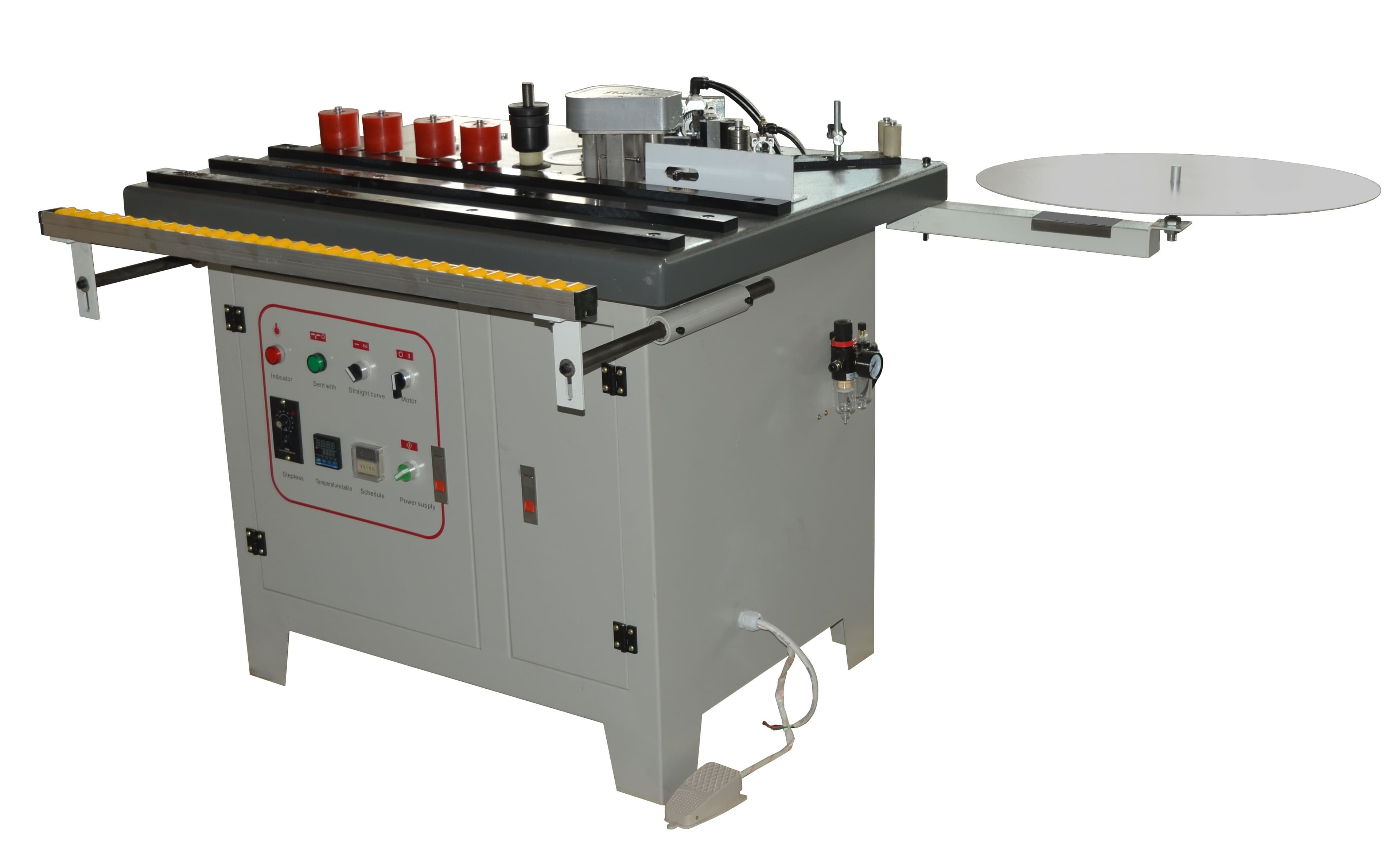
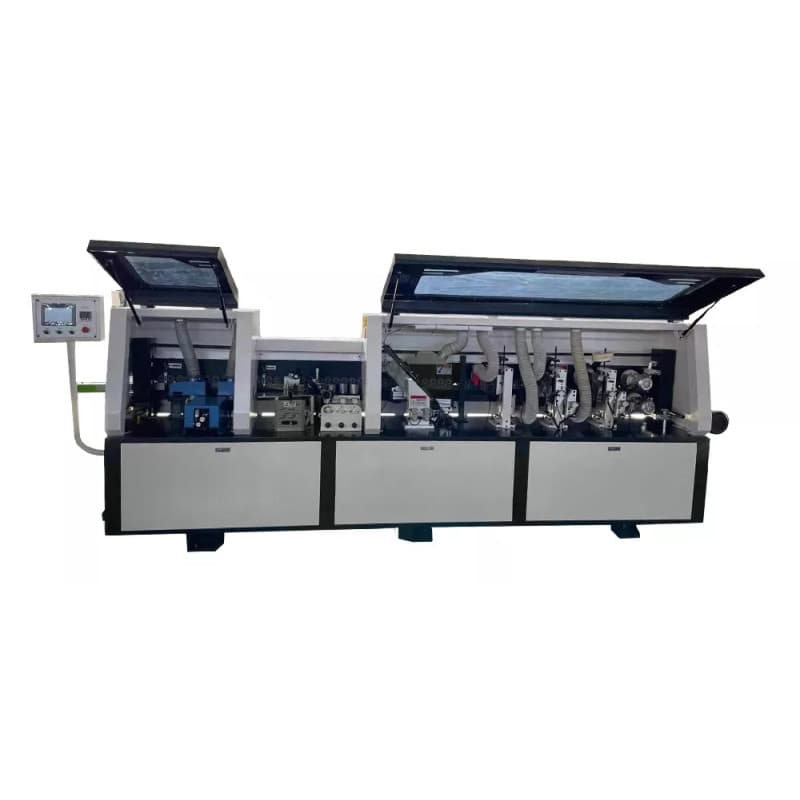
| Model | Edge polishing | Weight (kg) | Panel thickness, mm | Voltage (V) | Price incl. VAT |
|---|---|---|---|---|---|
| MB50 edge banding machine | No | 105 | 12-48 | 220 | 68 000 ₴ |
| FDB Maschinen MB 515S edge banding machine | No | 150 | 10-48 | 380 | 82 950 ₴ |
| FDB Maschinen MB S1 edge banding machine | Yes | 650 | 10-60 | 380 | 321 000 ₴ |
| Edge banding machine FDB Maschinen MB S265A | Yes | 1500 | 10-60 | 380 | 615 000 ₴ |
On a manual edge bander the operator guides the panel along the glue roller, so both straight and curved edges can be banded: radius worktops, shaped fronts. This suits one-off orders and small batches. A through-feed machine moves the panel on a conveyor and bands straight edges only, but evenly and fast, and its end trimming and flush trimming units deliver an almost finished part. If most of your work is cabinet furniture with straight parts, a through-feed machine pays off.
Check two ranges in the specifications. The first is edging thickness: thin 0.4-1 mm PVC needs less pressure than 2 mm ABS or veneer strips. The second is the panel height the machine accepts: standard 16 and 18 mm chipboard, 22-25 mm worktops, 36-40 mm glued parts. If you make thick worktops or doors, look for headroom at the upper limit, because that is what usually restricts what a workshop can produce.
Most of these machines use hot-melt glue granules melted in a glue pot. Heating time, temperature stability and pot volume matter: the more panels you run, the more glue must be ready. For a clean joint the panel edge must be straight and free of chips left from cutting, and the shop should be kept warm, otherwise the glue sets before the edging is pressed on.
After the edging is applied there is overhang along the length and thickness. On simple machines it is removed by hand with a knife, an end trimmer or a hand router, which adds noticeable time to every part. Through-feed models have their own end trimming and flush trimming units, sometimes scraping and buffing. Count how many running metres of edging you apply per shift: that tells you whether automated finishing will pay off.