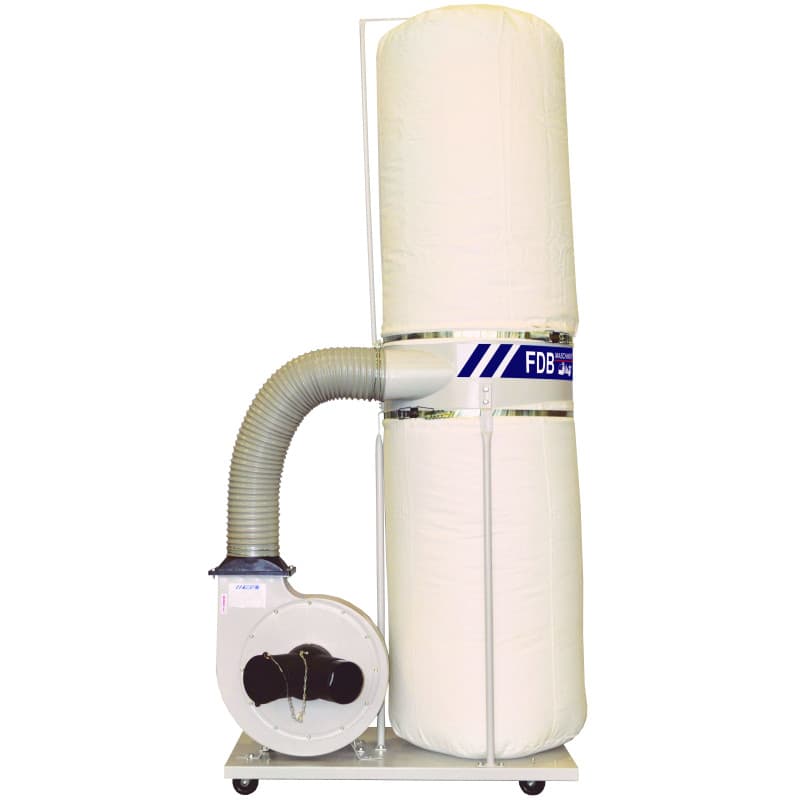
Dust Collectors and Chip Extractors
Dust collectors pick up chips, sawdust and dust from woodworking machines and keep the workshop clean. The range covers FDB Maschinen ST 300 extractors with two 100 mm inlets and a 153 dm3 bag and the ST 300S with three inlets and a 307 dm3 bag. Both come in 220 V and 380 V versions with airflow from 2100 to 3900 m3/h, so one unit serves one to three machines.
4 products · from 17 100 ₴
All: Woodworking machinesWood milling machines8Panel saws and circular saws10Table saws6Wood band saws9Thickness planers8Jointers4Edge banding machines4Combination woodworking machines8Dust collectors4Wood lathes6
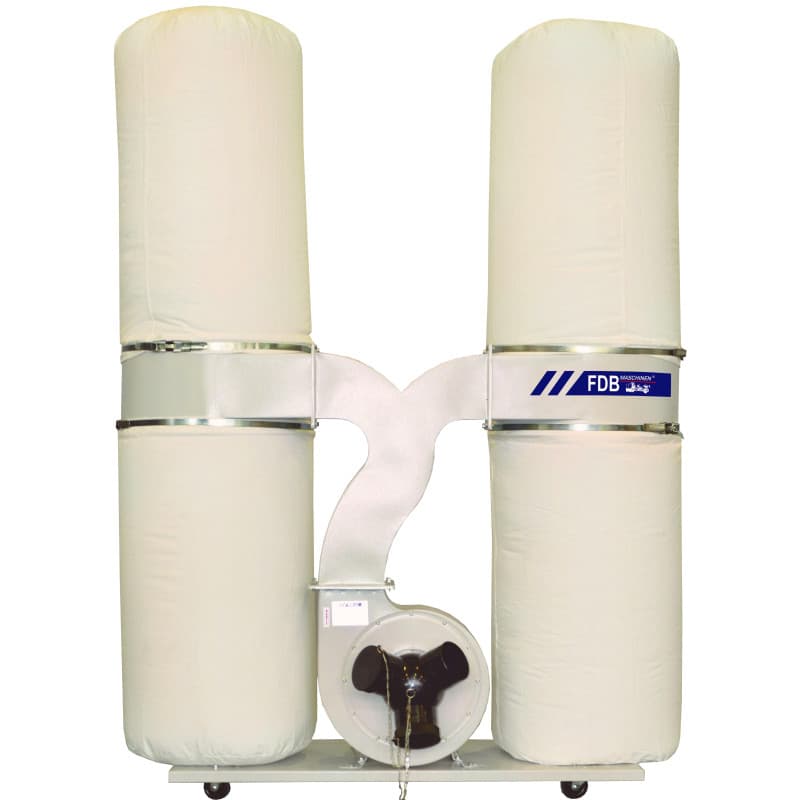
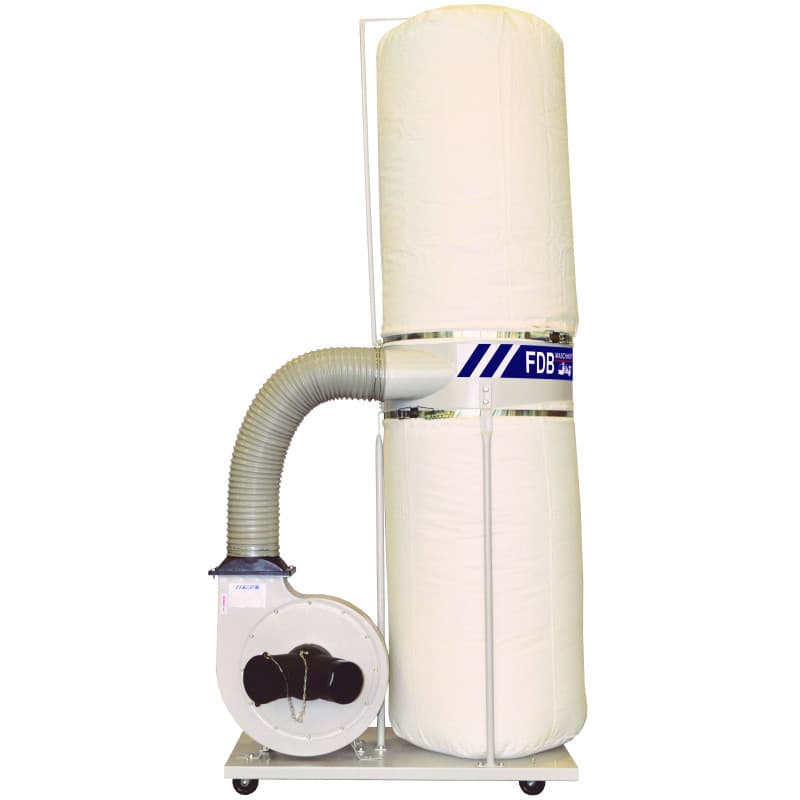
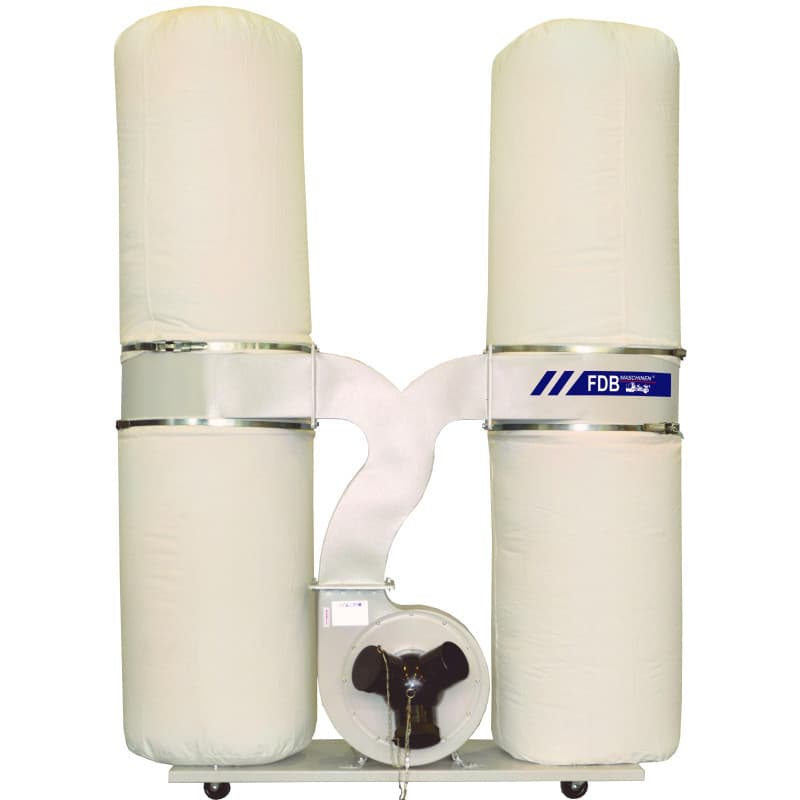
Model comparison
| Model | Weight (kg) | Bag diameter, mm | Voltage (V) | Capacity, m3/h | Price incl. VAT |
|---|---|---|---|---|---|
| Dust collector ST 300 | 40 | 500 | 220 | 2100 | 17 100 ₴ |
| Dust collector FDB Maschinen ST 300 380V | 40 | 500 | 380 | 2530 | 18 500 ₴ |
| Dust collector ST 300S | 59 | 500 | 220 | 3900 | 22 300 ₴ |
| Dust collector FDB Maschinen ST 300S 380V | 59 | 500 | 380 | 3900 | 24 500 ₴ |
How to choose a dust collector
Airflow and number of machines
Airflow in m3/h shows how much air the fan moves. Jointers, thicknessers and table saws produce a lot of chips, so one machine is well served by the ST 300 (2100-2530 m3/h), while two or three machines used in turn need the ST 300S at 3900 m3/h. Long hoses, bends and tees cut suction, so place the collector close to the machines.
Inlets and hoses
The ST 300 has two 100 mm inlets, the ST 300S three. Each connects to a machine outlet with a flexible hose, and an unused inlet is closed with a cap to keep suction. If the machine outlet has a different diameter, use an adapter. For thicknessers and jointers run 100 mm hose all the way, as any reduction quickly clogs with chips.
Bag, power and fine dust
Bag volume sets how often you empty it: 153 dm3 on the ST 300 and 307 dm3 on the ST 300S. The upper fabric bag filters the air, so shake it out regularly or suction drops. The 220 V versions suit a garage, the 380 V versions a shop with three-phase supply. Fine sanding dust is better handled by a separate fine filter unit.
FAQ
How does a dust collector differ from a shop vacuum?
A vacuum produces high suction with low airflow: it pulls fine dust through a thin 27-36 mm hose from hand tools. A dust collector moves a large volume of air, 2100-3900 m3/h on the ST 300 and ST 300S, through 100 mm hoses and carries away bulky chips from a jointer, planer or table saw. A vacuum on a stationary machine clogs quickly, while a dust collector gives little suction on a thin hose.
What is the difference between the 220 V and 380 V ST 300?
The body, the 153 dm3 bag, two 100 mm inlets and the 2.2 kW motor are the same. Airflow differs: 2100 m3/h for the 220 V version and 2530 m3/h for the 380 V version, so the three-phase unit pulls about a fifth more. For a garage with single-phase power take 220 V, for a shop with a three-phase line take 380 V. The ST 300S delivers 3900 m3/h in both versions.
How long can the hose from a dust collector be?
The shorter the hose, the stronger the suction at the machine. As a guide, keep each branch to 3-5 m of 100 mm flexible hose. Corrugated hose has more resistance than smooth pipe, so for permanent ducting use plastic or metal pipe with flexible hose only on the last section. Each 90-degree bend costs roughly as much suction as 1-2 m of straight pipe, so keep bends gradual.
How much space does a dust collector take?
Both models are 1960 mm tall, so check the ceiling in a garage or on a mezzanine. The ST 300 takes 900 x 600 mm and weighs 40 kg, the ST 300S 1400 x 600 mm and 59 kg. Leave access below to remove the lower bag and free space around the upper filter bag. The unit is noisy, so it is often placed behind a partition, but then the hose gets longer and suction drops.
Can it collect metal chips or dust from grinding metal?
No. The ST 300 and ST 300S are designed for wood chips and sawdust. A spark from an angle grinder or hot metal can ignite sawdust in the bag, and metal chips damage the impeller. Plastic hose also builds up static charge, so a hose with a metal spiral that is grounded is the better choice. Metalworking uses separate filter and ventilation units.
Can you help me choose a dust collector?
Yes. An engineer will match a dust collector to the number and type of your machines, their port diameters and your 220 V or 380 V supply, and advise on hoses and adapters. We issue a VAT invoice for companies and sole proprietors. Delivery across Ukraine, pickup in Dnipro is available.