Vibration Mounts or Foundation: How to Install a Machine Tool
Most medium-size machine tools with a rigid bed (lathes, milling, drilling and grinding machines, crank presses) can be installed without a foundation - on vibration mounts, provided the manufacturer does not prohibit it and the floor can carry the load. Anchoring to the floor is needed when the machine must not move or the manual explicitly calls for foundation bolts. A separate foundation is built for heavy equipment, long-bed machines, precision machines and impact-loaded equipment - to the drawing in the machine manual.
Three ways to install a machine: mounts, anchors, foundation
The first thing to open before choosing is the machine passport or operating manual. It has an installation section: the installation drawing, base requirements, fastening method and levelling procedure. If it says "foundation to drawing", the question is settled, and the rest of this article only explains why.
If the manual offers an option without a foundation or gives no requirements (common with used machines that come without documents), you choose one of three methods. They differ in how the machine is connected to the floor: elastically, rigidly to the floor, or rigidly to a separate concrete block.
Below is a short comparison. All our mounts are in the machine tool components section. Figures for our mounts come from their specifications; we do not quote concrete work costs, as they depend on the project and region.
| Method | How it works | What it gives | Limitations |
|---|---|---|---|
| Vibration mounts | Rubber-metal mount between bed and floor, height adjusted with the stud | No concrete work, levelling, less vibration transmitted, the machine can be moved | Only for equipment the manufacturer allows on mounts; each mount must work within its load range |
| Anchor bolts to the floor | The bed is bolted to the existing concrete floor over levelling wedges or screws | The machine cannot shift or tip over, low cost | Vibration passes into the floor and to neighbouring machines; accuracy depends on the slab condition |
| Separate foundation | A concrete block under the machine, separated from the shop floor, with foundation bolts | Adds stiffness to long beds, absorbs impacts, isolates from the shop | Design, concreting, curing time; moving the machine is practically impossible |
When vibration mounts are enough: no foundation needed
OV-series mounts are intended for medium-size machines of normal and high accuracy with rigid beds. In such machines the bed holds its own geometry, and a foundation is not needed as an extra stiffening element. So they are set on mounts directly on the shop floor and levelled with the adjusting stud.
The most common cases where mounts are a sensible choice:
- medium-size lathes, milling, drilling and grinding machines, when the manual allows installation without a foundation;
- crank presses, pumps, compressors, fans - unless the manufacturer prohibits installation on mounts;
- a shop where the layout changes often: a machine on mounts is moved without removing anchors or pouring new concrete;
- a rented building where you cannot cut the floor for a foundation;
- you need to reduce vibration transfer between neighbouring machines - the mechanism is covered in the article on equipment vibration isolation.
When a foundation or anchoring is required
A foundation is not only "so it stands". For some equipment the concrete block is part of the load path: the bed is designed to be rigidly fixed to the base, and without that it deflects or loses geometry. Such an installation is always described in the manual with an installation drawing showing foundation dimensions and bolt positions.
Signs that mounts will not be enough and you need to check the manual's foundation or anchoring requirements:
- a long bed (long lathes, planers, long grinding machines) - the base adds stiffness to the bed;
- high machine mass, when the load per support point exceeds the working range of the mounts;
- impact loads - hammers and other equipment working by impact: the manual specifies a separate foundation;
- precision machines for which the manufacturer specifies a separate foundation or special vibration isolation;
- a high centre of gravity or overhanging masses, when the manual requires fixing against tipping, or an installation where the machine must not shift even by a millimetre.
Floor requirements: what to check before installation
A vibration mount does not replace the floor; it only transfers the load to it. Each mount carries the weight of part of the machine with the workpiece, so the slab must take this point load without punching or cracking. We deliberately do not name a slab thickness or concrete grade: they depend on machine mass, number of mounts and the base condition, and any requirements come from the machine manual or the building design.
What you can check yourself: the floor is solid concrete, without voids, gaps or settlement at the installation spot; there is no timber or floating covering under the mounts; the height difference under the mounts fits within the adjustment travel (12 mm for OV-31M); no expansion joint runs between the mounts. The mass of the machine with its heaviest workpiece is easy to estimate with the metal weight calculator.
If the floor condition is doubtful, or the machine is heavy and long, show the manual and the shop plan to a structural engineer before the equipment arrives. The installation procedure on mounts is described in the article how to install a machine on vibration mounts.
Decision table: vibration mounts, anchors or foundation
The table is a guide, not a substitute for the manual. If the manual and the table disagree, the manual is right.
| Situation | Sensible option | What to check |
|---|---|---|
| Medium-size lathe or milling machine, rigid bed | Vibration mounts | Permission in the manual, load on each mount |
| Pillar drill, light milling machine, tool grinder | Light-duty mounts | Load per mount not below its minimum |
| Crank press | Mounts or foundation - per manual | Whether the manufacturer allows mounts; anti-shift fixator |
| Long lathe, planer, long grinding machine | Foundation to drawing | Installation drawing in the manual |
| Hammer, impact-action equipment | Separate foundation | Foundation design per manual |
| Precision machine | As the manufacturer specifies: foundation or special isolation | Base requirements and vibration from neighbours |
| Machine that is moved often | Vibration mounts | Floor condition at every location |
| Used machine without a manual | Find the manual or a model analogue; do not rush the concrete | Bed type, mass, length, holes for foundation bolts |
Which vibration mounts fit: our models
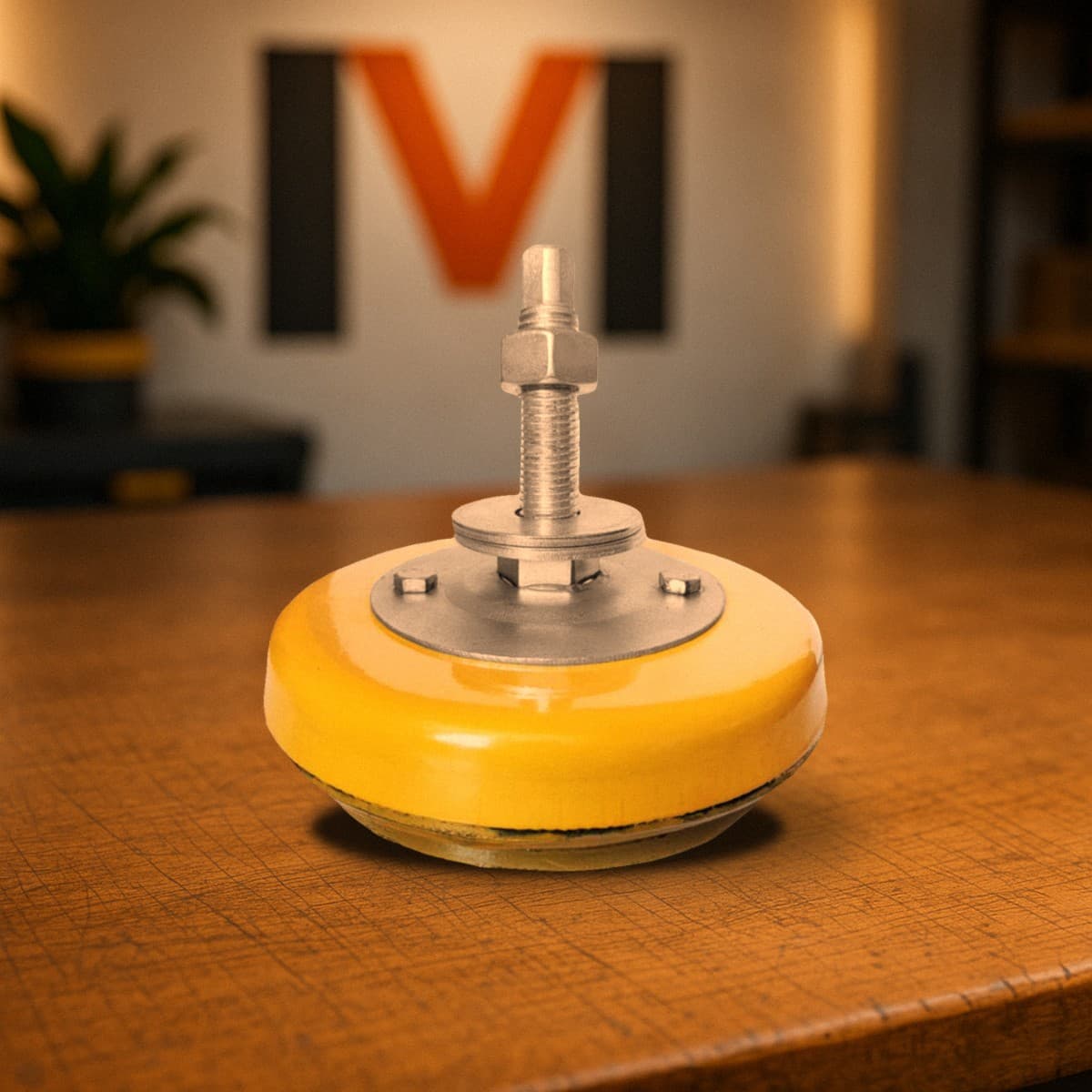
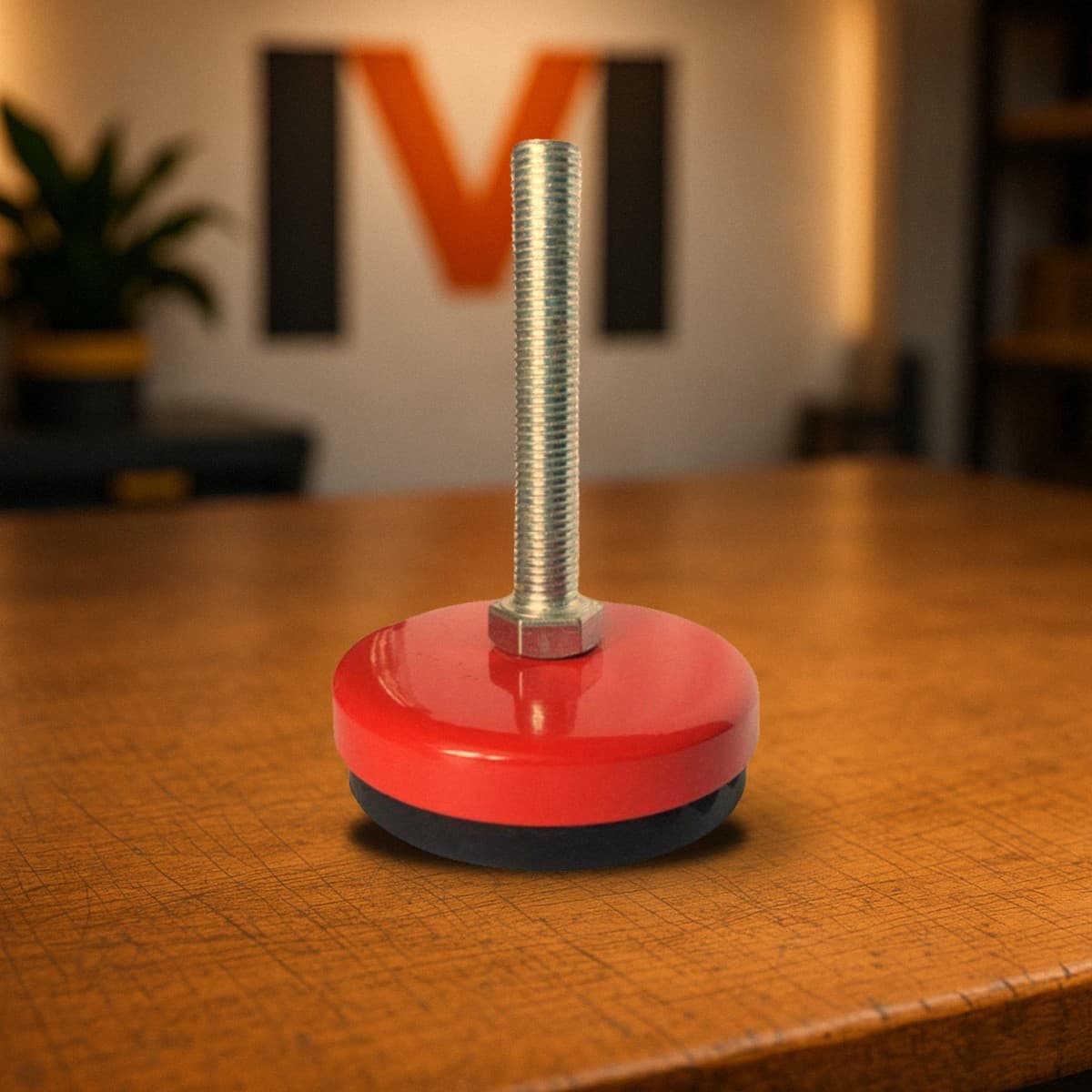
Choose a mount so that the load on each one falls within its working range - not only below the maximum but also above the minimum: an underloaded mount acts as a rigid pad. For medium-size machines this is usually the OV-31M vibration mount, for light equipment the OV M12 vibration mount or hinged mounts for an uneven base. How many you need is covered in how many vibration mounts you need.
Example (illustrative): a 3,000 kg machine on six OV-31M mounts - 500 kg per mount on average, inside the 250-4,500 kg range. But the weight along the bed is uneven (heavy headstock), so calculate the load at each point, with a margin as per the machine manual. The overall selection logic is in the guide to choosing vibration mounts for machine tools.
| Model | Load per mount | Stud | Feature | Price |
|---|---|---|---|---|
| OV-31M | 250-4,500 kg | M16 | 140 mm pad, 12 mm height adjustment | from ~1,085 UAH excl. VAT |
| OV M12 | 40-250 kg | M12 | 80 mm pad, no height adjustment | from ~684 UAH excl. VAT |
| IV M12 | 40-250 kg | M12 | Hinged stud | from ~620 UAH excl. VAT |
| Hinged rubber-metal (OV-30sh type) | 40-250 kg | M12 | For uneven and inclined bases | from ~620 UAH excl. VAT |
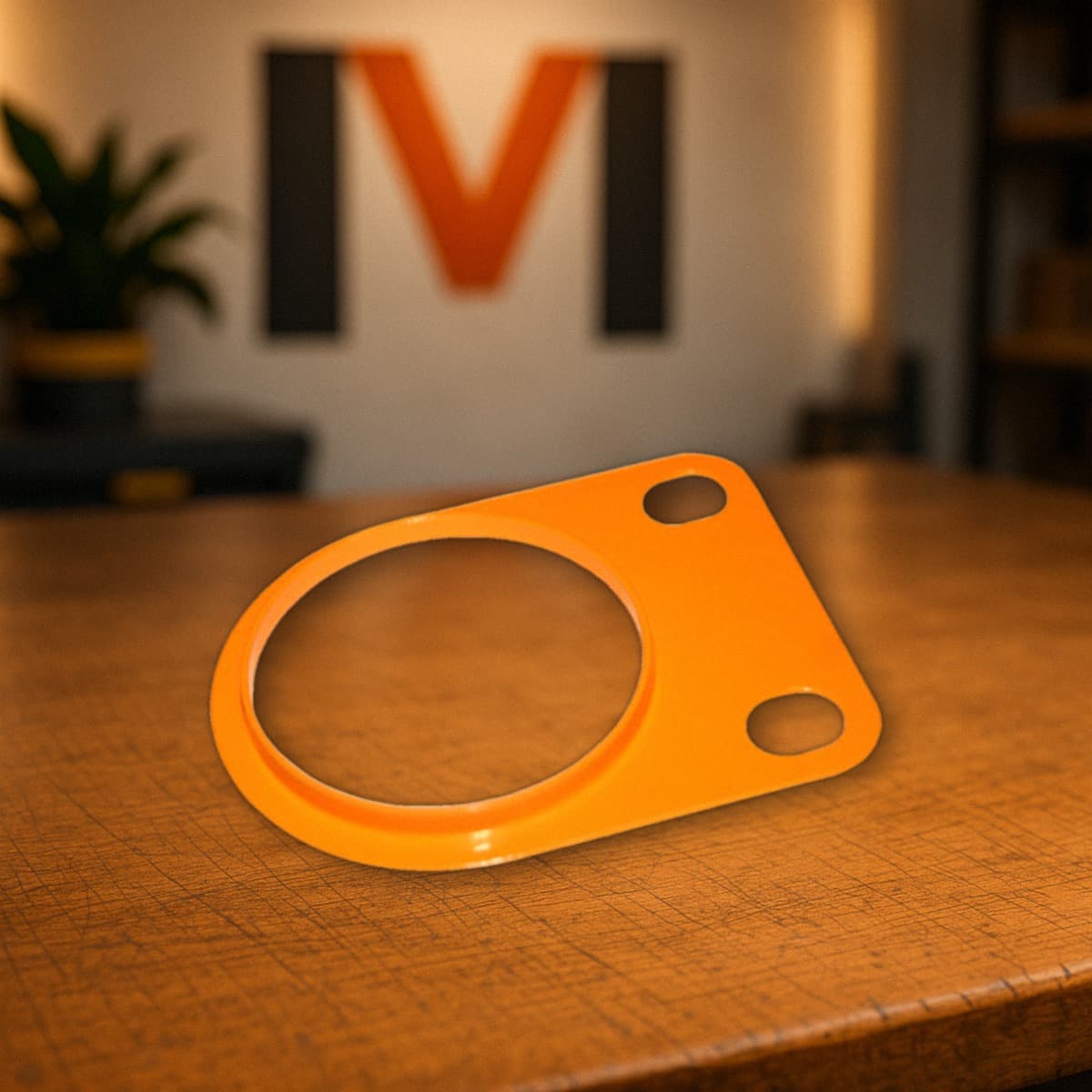
| OV-31M fixator | - | - | Keeps the mount from shifting during operation | from ~345 UAH excl. VAT |
Common mistakes when choosing between mounts and a foundation
Most problems come not from the method itself, but from choosing it without the manual and without a load calculation.
- putting on mounts equipment for which the manual specifies a foundation - especially long beds and impact machines;
- choosing mounts "with maximum margin" for a light machine: below the minimum load there is no isolation;
- bolting the machine rigidly with anchors while also setting it on vibration mounts - the anchor short-circuits the elastic mount and it stops isolating;
- not re-levelling the machine after run-in, when the mount rubber has settled under load;
- placing mounts on a cracked slab, a timber floor or across an expansion joint;
- pouring a foundation for a used machine by eye without finding the model's installation drawing - checking used equipment is covered in used or new machine tool.
FAQ
Can a lathe be installed without a foundation?
Yes, medium-size lathes with a rigid bed are often set on vibration mounts directly on the floor if the manual allows it. For long and heavy lathes the manual usually specifies a foundation to drawing.
Which is better for a machine: anchor bolts or vibration mounts?
Anchors fix the machine rigidly but transmit vibration into the floor. Vibration mounts reduce vibration transfer, allow levelling and moving the machine; a fixator keeps the OV-31M from shifting.
What floor is needed for a machine on vibration mounts?
A solid concrete slab without cracks, voids or joints at the installation spot that carries the load under each mount. Check specific base requirements in the machine manual or the building design.
Can a crank press be set on vibration mounts?
Crank presses are among the equipment installed on OV-31M mounts, unless the press manufacturer prohibits it. Check the installation requirements in the press manual and use anti-shift fixators.
How do I know whether my machine needs a foundation?
Open the installation section of the manual: it has the installation drawing and the fastening method. If there is no manual, send the model and photos via the request for quotation form - we will help select mounts or tell you what to clarify.