Collets and collet chucks: ER sizes, 5C, how to choose
A collet is a slotted spring sleeve that grips the shank of an end mill, drill or workpiece around its full circumference; a collet chuck is the body with a taper and nut it works in. For a milling machine with an MT2-MT3 spindle the most versatile choice is an ER25 or ER32 chuck with a set of 1-16 or 2-20 mm collets in 1 mm steps. Match the chuck shank exactly to the spindle taper (MT2, MT3, MT4, ISO40) with a drawbar thread, and for a lathe fed with bar stock look at 5C or a flange-mounted ER chuck.
What a collet is and how collet clamping works
A collet is a steel sleeve with lengthwise slots and an external taper. When the nut or drawbar pulls it into the chuck taper, the segments close and grip the tool shank evenly. That is why collet clamping centres far more accurately than a keyed drill chuck and holds the tool along its whole length rather than at three points.
When people look for a collet for a machine, they usually mean one of three things: holding end mills and drills on a milling machine, holding small workpieces or bar on a lathe, or holding bits in a hand router or rotary engraver. The principle is the same, but the collet systems differ and are not interchangeable.
The main advantage of a collet over a drill chuck in milling is side load. A drill chuck on a B16 taper is made for axial force; side force loosens it and can knock it off the taper. A collet chuck with a drawbar shank holds the cutter rigidly, with several times less runout.
Collet types: ER, 5C, Morse taper, router and engraver collets
In metalworking the most common system is ER to DIN 6499 (ISO 15488). An ER collet has a double taper and slots from both ends, so each one covers a 0.5-1 mm range and a set of 10-18 pieces covers all common shanks. Lathes working from bar often use 5C collets, and small milling machines use collets that fit straight into the spindle taper.
Morse taper collets go into the spindle without a chuck and are pulled in by the drawbar. This gives the shortest overhang and the highest rigidity, but each collet fits one shank diameter only. A short comparison of the systems is below.
| System | Where it is used | Range | Key feature |
|---|---|---|---|
| ER (ER11-ER40) | Milling, drilling, CNC spindles, lathes with a chuck | 0.5-26 mm depending on series | One collet per 0.5-1 mm range, needs a chuck with a nut |
| 5C | Lathes, indexing fixtures | Round bar up to about 27 mm | Pulled by a draw tube through the spindle, bar passes through; each collet fits its own size |
| MT2, MT3 collets | Small drill-mill machines | Depends on the set (BF 20L options: 4-12 mm) | No chuck, drawbar clamping, one diameter per collet |
| Hand router collets | Wood routers | 6, 8, 12 mm, 1/4 and 1/2 inch | Specific to the router model, usually not ER compatible |
| Engraver collets | Rotary engravers, die grinders | Mostly 2.4 and 3.2 mm, sets also 0.8 and 1.6 mm | Small collet with a nut on the engraver shaft |
ER11-ER40 collet sizes: clamping range table
The number in an ER designation is roughly the collet outside diameter in millimetres. The bigger the series, the thicker the shank it takes, but the bigger and heavier the chuck. A 10 mm ER32 collet grips shanks from 9 to 10 mm, a 3 mm ER11 collet from 2.5 to 3 mm.
The ranges in the table are typical for standard sets; the end sizes can differ slightly between makers, so check the marking on the collet itself.
The most common buying mistake is getting ER20 for a machine that will run end mills with 16 mm shanks. First write down the largest shank you will actually use, and only then choose the series.
| Series | Clamping range | Range of one collet | Typical use |
|---|---|---|---|
| ER11 | 0.5-7 mm | 0.5 mm | CNC engraving spindles, small drills and cutters |
| ER16 | 0.5-10 mm | 1 mm | Compact spindles, drills up to 10 mm |
| ER20 | 1-13 mm | 1 mm | 1.5-2.2 kW CNC spindles, small milling machines |
| ER25 | 1-16 mm | 1 mm | Benchtop mills with MT2, drills and end mills up to 16 mm |
| ER32 | 2-20 mm | 1 mm | The most versatile series for mills and drills with MT2-MT4 |
| ER40 | 3-26 mm | 1 mm | Heavy milling, machines with MT4 and ISO40 |
Collet chuck for a milling machine: the shank taper
A collet chuck consists of a body with a shank, an internal taper for the collet and a nut. The shank is chosen to fit the spindle taper, and its drawbar thread must match the machine drawbar. The spindle taper is stated in the manual; the table lists models from our metal milling machines section.
MT2 spindles usually take ER20-ER32 chucks. For example, for the OPTImill BF 20L Vario the manufacturer offers MT2/ER25 collet chucks with 15 collets 1-16 mm and MT2/ER32 with 18 collets 3-20 mm, plus a set of MT2 collets 4-12 mm used without a chuck.
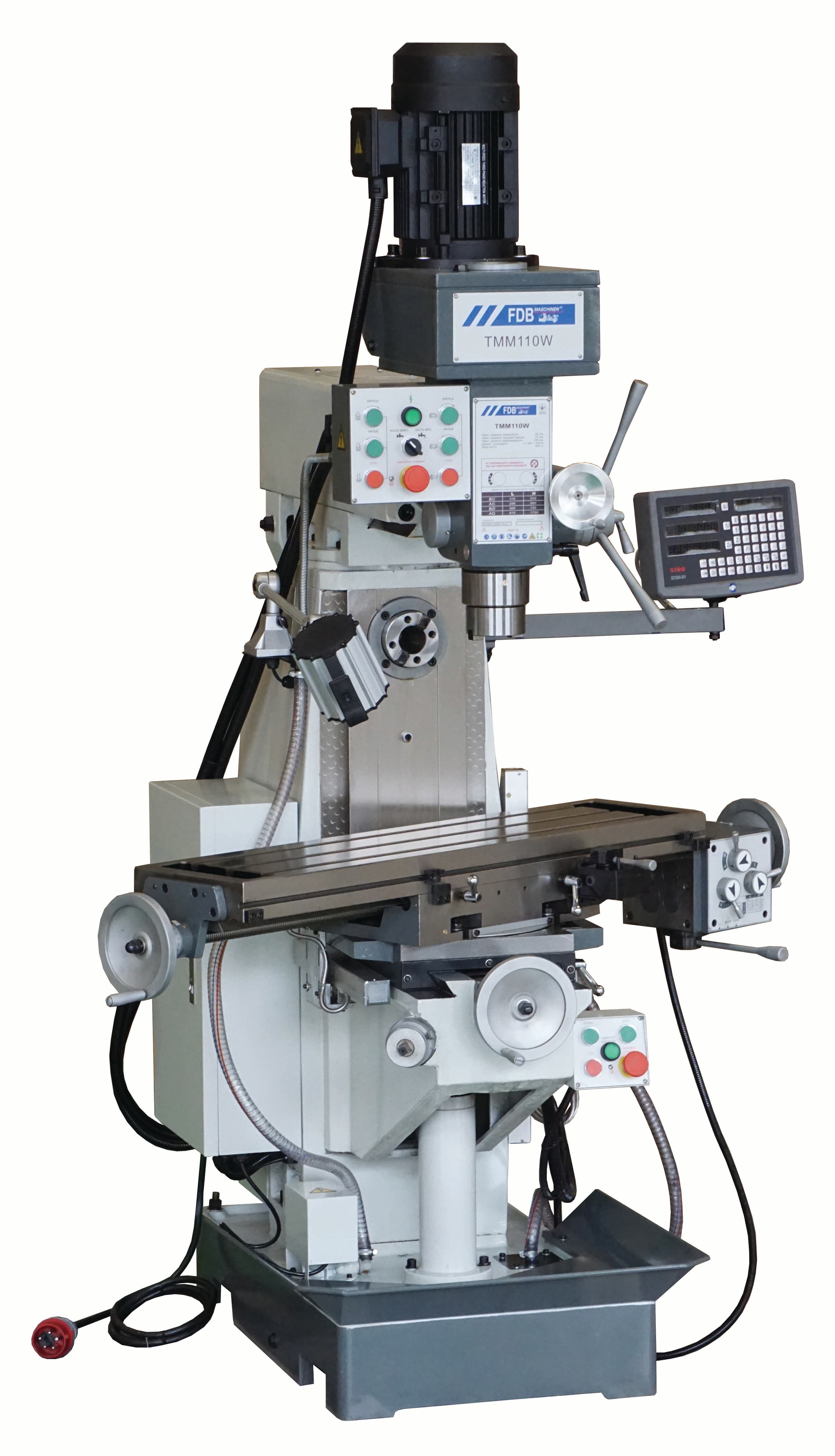
On ISO40, ER32 and ER40 collet chucks are standard tooling. If you are buying a chuck for a knee mill such as the FDB Maschinen TMM110W, check which kind of 40 taper it has (drawbar type or pull-stud type) - they look alike but are not interchangeable.
| Machine | Spindle taper | Which collet chuck to fit | Machine price incl. VAT |
|---|---|---|---|
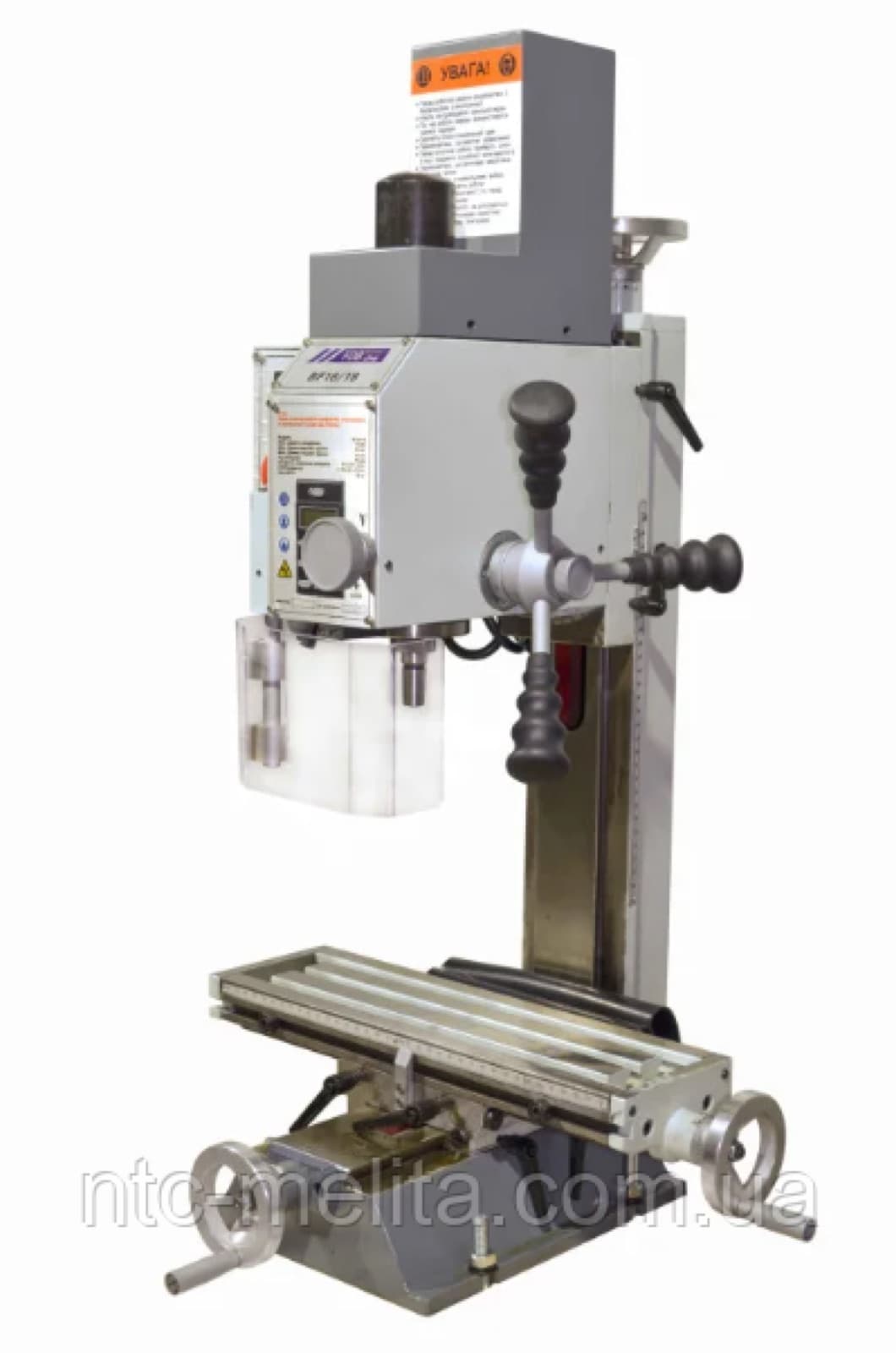
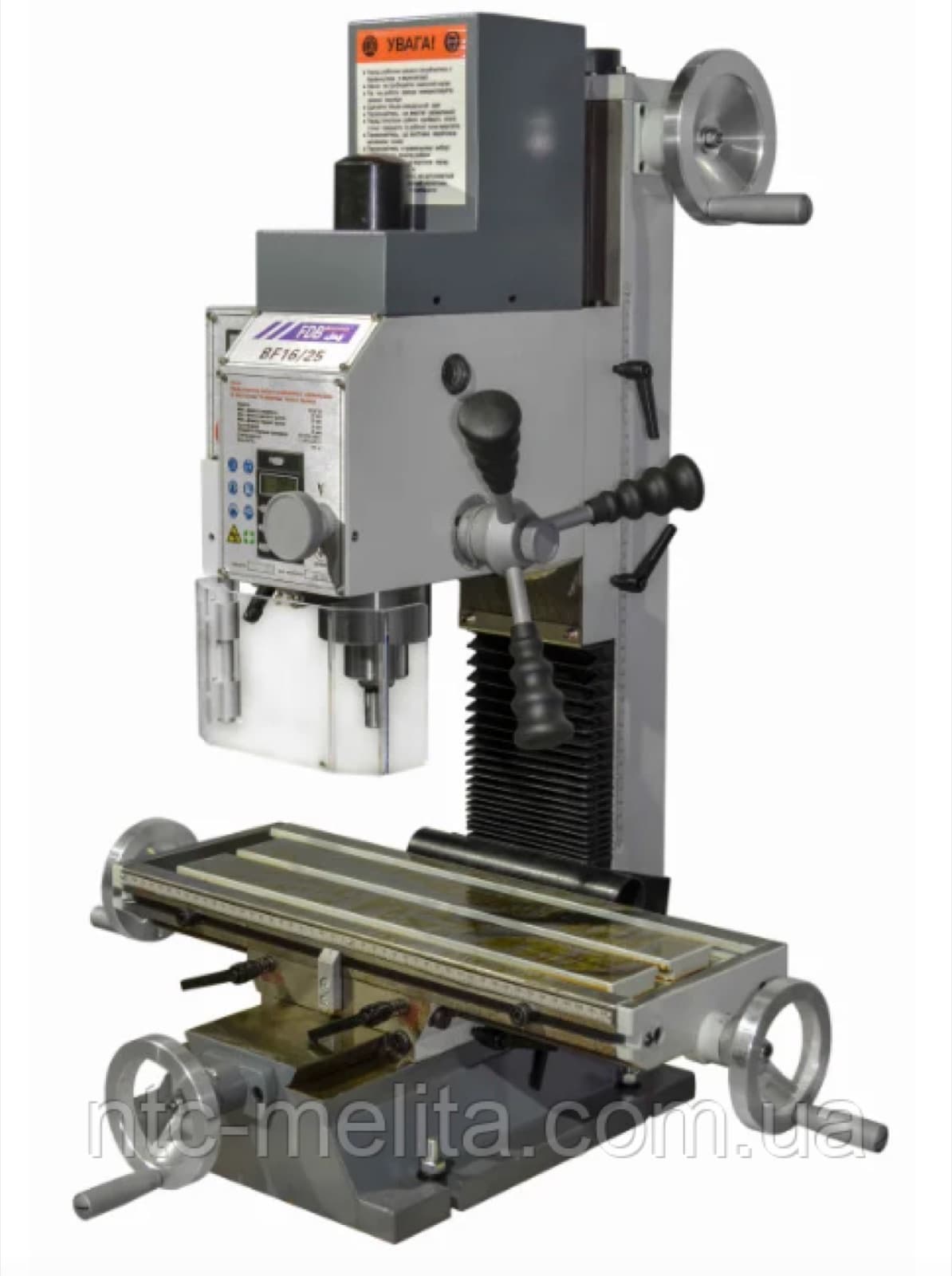
| FDB Maschinen BF 16B | MT2, M12 drawbar | MT2/ER20 or ER25 | from ~74,000 UAH |
| BF20 Vario | MT2 | MT2/ER25 or ER32 | from ~83,000 UAH |
| OPTImill BF 20L Vario | MT2 | MT2/ER25 or ER32 (offered as manufacturer options) | from ~88,000 UAH |
| FDB Maschinen BF 20B | MT3 | MT3/ER32 or ER40 | from ~87,000 UAH |
| FDB Maschinen BF45VH | see the passport | ER32 or ER40 on the taper from the passport | from ~350,000 UAH |
| FDB Maschinen TMM110W | ISO40 | ISO40/ER32 or ER40 | from ~395,000 UAH |
Collet chuck for a lathe
On a lathe a collet is needed when you must grip ground bar, an already finished surface or a small part a few millimetres in diameter accurately and without jaw marks. Practically all benchtop metal lathes have an MT3, MT4 or MT5 spindle taper, so the simplest option is an ER chuck with a shank for that taper and a draw bar.
The downside is that such a chuck blocks the spindle bore, so bar can no longer be fed through. The OPTIturn TU 2004 V, for example, has an MT3 spindle taper and a 21 mm spindle bore. If you make parts from bar in batches, a flange-mounted ER chuck in place of the jaw chuck or a 5C system with a draw tube through the spindle works better.
A collet on a lathe is not a replacement for a jaw chuck: it holds only sized bar and only within its range. How they differ and how to choose the main chuck is covered in how to choose a lathe chuck.
Accuracy: collet runout and how to check it
Ordinary mid-range ER collets give radial runout of about 0.01-0.015 mm, precision collets (classes AA, UP) up to 0.005 mm. It matters at what overhang the maker measured it: runout at the tip of a long cutter is always higher than next to the nut. Total runout is the sum of spindle, chuck taper, collet and nut - even a good spindle will not help if a cheap collet gives 0.03 mm: it wipes out the accuracy of the machine.
Runout hurts small end mills the most: the teeth are loaded unevenly, the longest tooth does all the work and breaks first, and the surface comes out wavy. The check takes five minutes:
- Clamp a ground test pin or the shank of a new carbide drill of the right diameter in the collet.
- Mount a dial indicator reading 0.01 mm or finer on a magnetic stand - you can find one in the machine tooling section.
- Turn the spindle by hand and take a reading next to the nut, then 30-40 mm away from it.
- If runout at the overhang is twice the stated value, clean the tapers, reseat the collet in the nut and repeat; if that does not help, replace the collet, then check the chuck.
Which collet to choose for the job
Start with the tooling: list the shanks of the cutters and drills you actually use (cutter types are covered in types of metal milling cutters). Then take the spindle taper from the manual, and only then pick the collet series.
- Benchtop mill with MT2, such as the FDB Maschinen BF 16B, cutters up to 16 mm - an MT2/ER25 chuck with a 1-16 mm set.
- Mill with MT3-MT4 or ISO40, cutters up to 20 mm - ER32 with a 2-20 mm set; for 25 mm cutters - ER40.
- Small parts on a mini lathe - an ER chuck for the spindle taper or an optional collet attachment, as offered for the SM-300E mini lathe (collets 3-12 mm).
- Hand wood router - a collet for that router model: 8 mm for most hobby routers, 12 mm or 1/2 inch for heavy ones.
- Engraver and die grinder - 2.4 and 3.2 mm collets; CNC spindle - the series marked on the nut, most often ER11 or ER20.
Common collet mistakes
Most runout and tool-slip problems are not a faulty collet but wrong use. Here is what we see most often:
- Putting the collet into the chuck and then screwing on the nut. With ER, the collet first snaps into the eccentric ring of the nut until it clicks, and only then is the nut screwed onto the chuck.
- Tightening the nut with no tool in the collet - the segments deform and the collet loses accuracy.
- The shank goes into less than 2/3 of the collet length - the collet tilts and does not hold.
- Clamping a size outside the range: an 8.5 mm shank will not hold in a 10-9 mm collet, you need a 9-8 mm one.
- Dirt and chips in the chuck or spindle taper - even a thin film gives runout of a few hundredths.
- Using a drill chuck instead of a collet chuck for milling, especially on a taper without a drawbar. Work out speeds for cutters in a collet chuck with the speeds and feeds calculator.
FAQ
What is a collet in simple terms?
It is a slotted spring sleeve with a taper that closes when the nut is tightened and grips the tool shank or workpiece evenly. It centres more accurately than a jaw chuck and holds along its full length.
Which collet do I need for a wood router?
One made for your router model and the shank of your bits: most often 8 mm, less often 6 mm, 12 mm, 1/4 or 1/2 inch. Hand router collets are usually not ER compatible.
What is the difference between ER32 and ER25?
ER32 is larger: it clamps 2 to 20 mm against 1-16 mm for ER25, and its chuck is heavier. For MT2 machines and cutters up to 16 mm ER25 is enough; cutters up to 20 mm need ER32.
Can I put a collet chuck in a drill press?
For drilling, yes, if the shank matches the quill taper. For milling, a drill press has no drawbar and no rigid quill, so side forces can pull the chuck out of the taper.
How many collets does a set need?
An ER set in 1 mm steps covers every size in the series: for ER32 that is 18-19 collets from 2-3 to 20 mm. If you use only 3-4 cutter sizes, you can buy just those collets.