Spindle speed and feed
Enter the drill or workpiece diameter, material and tool type - the calculator returns spindle speed, feed per revolution, feed rate and whether to use coolant.
660 rpm
- Cutting speed
- 25 m/min
- Feed per revolution
- 0.15 mm/rev
- Feed rate
- 99 mm/min
- Cooling
- Coolant required
Not sure about the numbers? An engineer will check the calculation and pick equipment from stock or to order.
Matching products
All drill presses →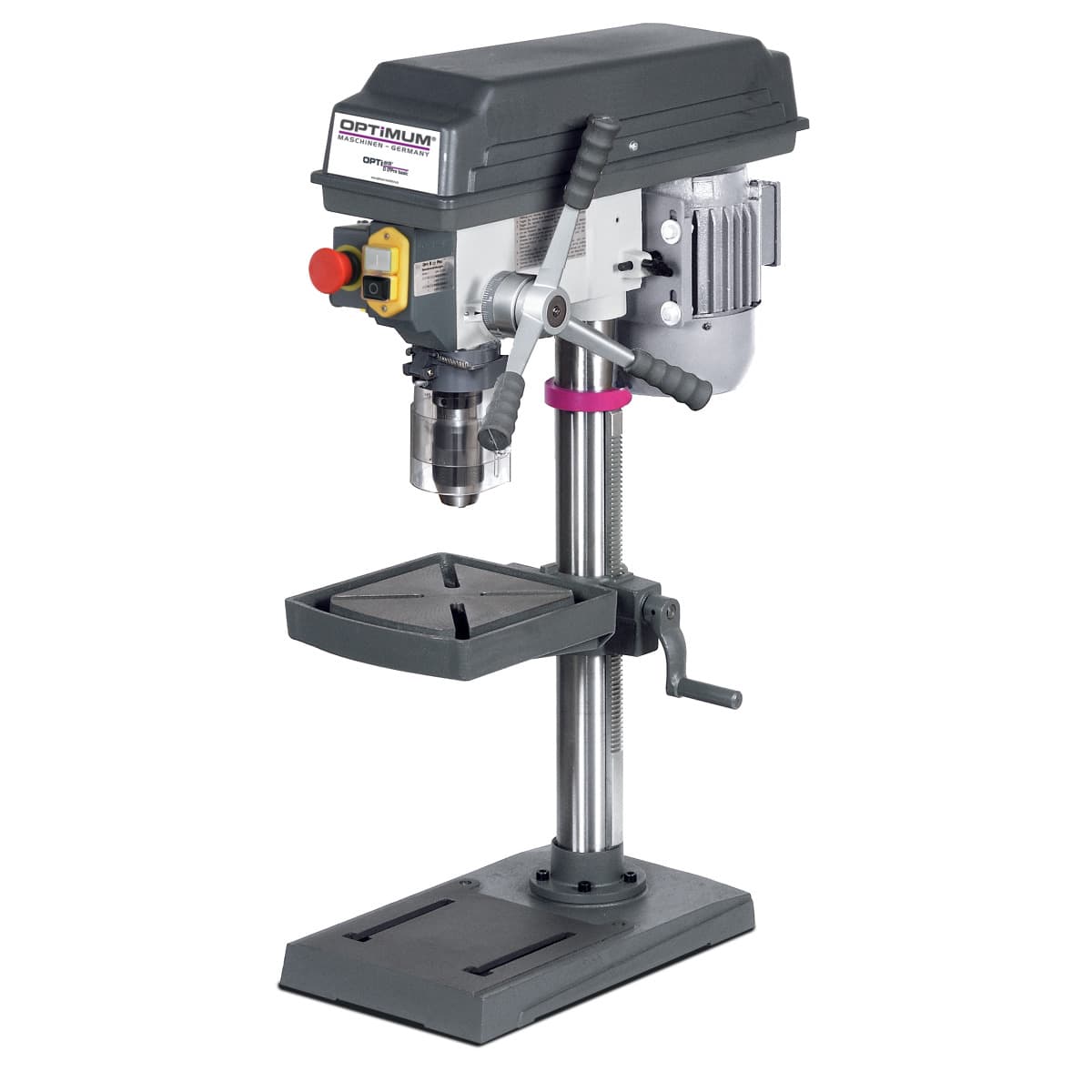
● In stockOPTIMUM B17Pro basic bench drill press
voltage230 Vweight36.5 kg
22 080 ₴incl. VAT · 18 400 ₴ excl. VAT

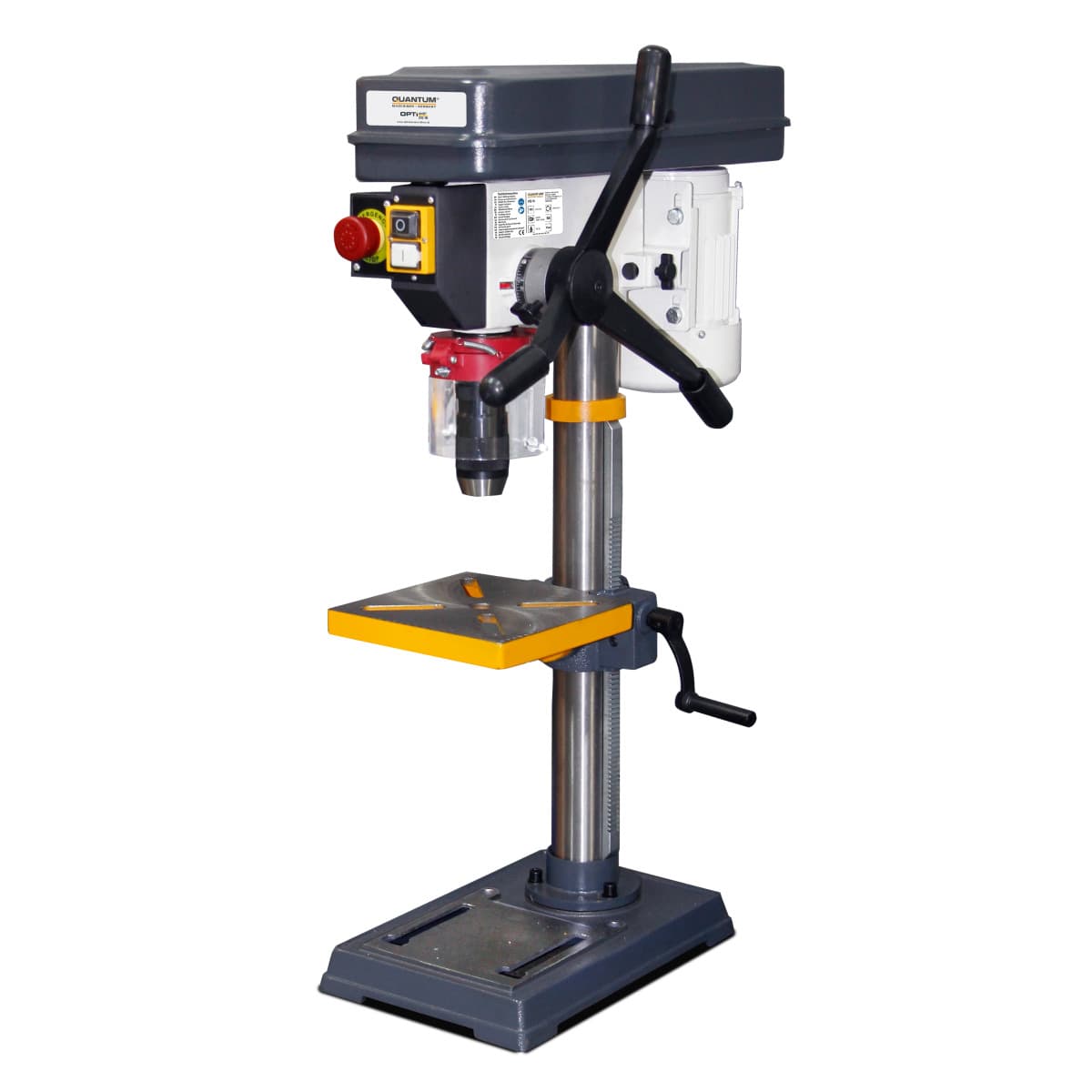
● In stockQuantum DQ 16 bench drill press
power0.45 kWvoltage230 Vweight28 kg
13 560 ₴incl. VAT · 11 300 ₴ excl. VAT
How it is calculated
Spindle speed: n = 1000 × Vc / (π × D), where Vc is cutting speed in m/min and D is the drill or workpiece diameter in mm. For carbide drills the table speed is multiplied by 0.8, because a drill works in harsher conditions than a turning insert.
Drill feed in structural steel: up to 6 mm - 0.08 mm/rev, up to 12 mm - 0.15, up to 20 mm - 0.22, above 20 mm - 0.3 mm/rev. Multiply by 0.7 for stainless and by 1.4 for aluminium. Turning feed: 0.15 mm/rev for HSS and 0.25 mm/rev for carbide. Feed rate = n × f.
Example: a 10 mm HSS drill in steel - 1000 × 25 / (3.14 × 10) ≈ 796 rpm, feed 0.15 mm/rev, feed rate about 119 mm/min.
Cutting speed by material
| Material | Vc, HSS, m/min | Vc, carbide, m/min | Cooling |
|---|---|---|---|
| Structural steel | 25 | 90 | coolant |
| Stainless steel | 10 | 50 | coolant |
| Cast iron | 20 | 70 | dry or air |
| Brass, bronze | 40 | 150 | coolant |
| Aluminium | 60 | 250 | coolant |
Practical tips and common mistakes
- Benchtop drill presses usually top out at about 2500 rpm. A 6 mm drill in aluminium wants roughly 3200 rpm, so you cannot reach the optimum - use the top step and do not drop the feed to nothing.
- Do not drill stainless gently: a light feed and excess speed work-harden the metal and the drill stops cutting. Keep a steady feed without dwelling.
- Cast iron produces powdery chips and is cut dry; coolant mixed with cast iron dust turns into an abrasive paste.
- The numbers are a starting point. If the chips turn blue or the drill squeals, drop one speed step.
- Before tapping, size the hole with the tap drill calculator.
When these formulas are not enough
For deep holes (over 5 diameters), hardened steels, titanium and interrupted cuts on lathes, take cutting data from the tool maker's catalogue - there it is tied to a specific carbide grade and coating.