Core bit for electrical boxes: which diameter and how to drill
For a standard round flush box (outer diameter about 64-68 mm, depth 40-45 mm) the hole in concrete or brick is drilled with a 68 mm core bit to a depth of 50-55 mm. A 72-82 mm core bit is used when the box is set in gypsum mortar with extra clearance, into thick plaster, or when the box body is wider than usual. Always check the exact outer diameter on the box packaging.
Flush box sizes: diameter and depth
Most sockets and switches sold in Ukraine fit a round European-type flush box. Its inner diameter is about 60 mm, and the outer diameter including the wall and ribs is 64-68 mm depending on the manufacturer. A regular box is 40-45 mm deep; deep boxes are 60 mm and more.
The hole is drilled slightly larger and deeper than the box. The extra diameter leaves room for the mortar that holds the box. In depth you need 5-10 mm of margin so the box does not bottom out and its rim ends up flush with the future plaster. For a 45 mm deep box that means a 50-55 mm deep hole.
Before buying a core bit, look at the box packaging: the manufacturer usually states the outer diameter and the core bit size the box is designed for. The sizes below are typical practice, not a standard for every model.
Which core bit to take: 68, 72 or 82 mm
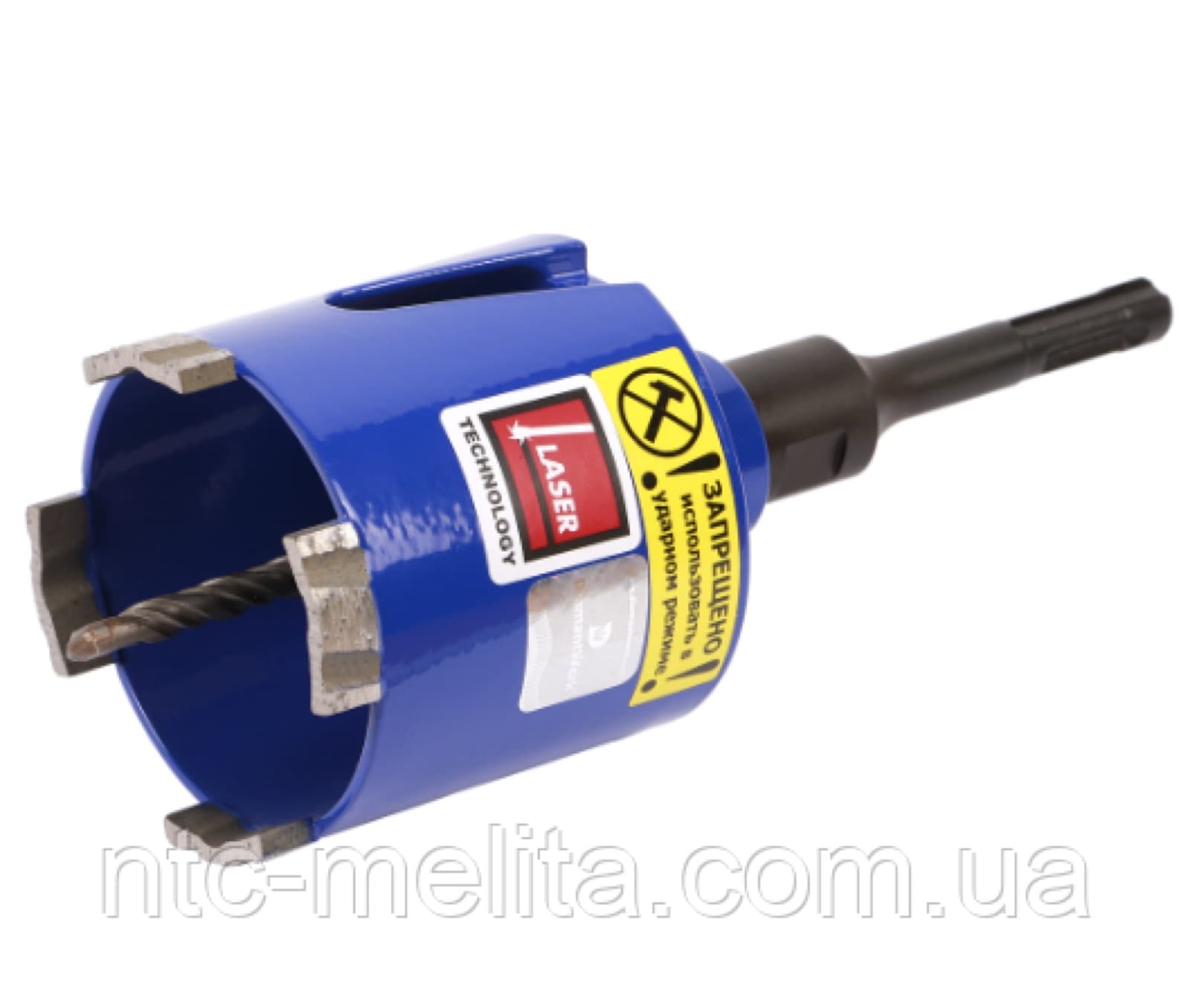
68 mm is the most common core bit size for sockets. Boxes for concrete and brick and boxes for drywall are both made for it.
A 72 mm core bit is used when the wall is uneven and the box will be levelled with mortar, when the outer diameter of the box is close to 68 mm. 82 mm is for boxes with a wider body, deep and special boxes for modular devices, and for boxes set into a thick plaster layer. Junction boxes and large mounting housings of about 100 mm need 102-112 mm core bits, which usually run on a diamond drilling rig.
| What goes in | Core bit diameter | Tool |
|---|---|---|
| Standard flush box in concrete or brick | 68 mm | Rotary hammer without impact, diamond core bit M16 / SDS-plus |
| Box set in mortar with levelling, uneven wall | 72 mm | Rotary hammer without impact, diamond core bit M16 / SDS-plus |
| Wide or deep box, thick plaster | 82 mm | Rotary hammer without impact, diamond core bit M16 / SDS-plus |
| Flush box in drywall | 68 mm | Drill, drywall hole saw, no impact |
| Reinforced concrete with dense rebar, many holes | 72-82 mm | Diamond drilling rig, 1 1/4 UNC shank |
| Junction box of about 100 mm | 102-112 mm | Diamond drilling rig, 1 1/4 UNC shank |
Concrete, brick or drywall: diamond or carbide core bit
A diamond core bit cuts by abrasion: the diamond coating or segments grind through concrete, brick and even rebar if they hit it. It works only in rotation mode without impact - hammering knocks off the diamond layer and breaks the segments. The hole edge stays clean and the wall does not crack.
A carbide (TCT) core bit for a rotary hammer has carbide teeth and works with impact. It is cheaper and fast in brick and unreinforced concrete, but it stalls on rebar and the teeth chip. The hole edge is rougher.
Aerated concrete and foam blocks do not need diamond - a carbide core bit without impact will do. Drywall is cut with a drywall hole saw on a drill at low speed so the paper facing does not tear.
Dry or wet drilling. The 68, 72 and 82 mm core bits covered here allow both modes. Dry drilling is more convenient in occupied buildings, but the bit must be pulled out of the hole more often to cool down and clear dust. Water cools the segments and extends bit life, so it pays off in reinforced concrete.
Shank: M16, SDS-plus and 1 1/4 UNC
Core bits for flush boxes used on a rotary hammer have a working length of about 65 mm and an M16 thread in the base. They are connected to the rotary hammer through an M16 to SDS-plus adapter, which usually also holds a centring drill. Check the product card to see whether the adapter is included, or pick one separately.
The catalog has a 68 mm diamond core bit, 72 mm and 82 mm for concrete and brick, dry and wet drilling, at about 3,100-3,300 UAH incl. VAT.
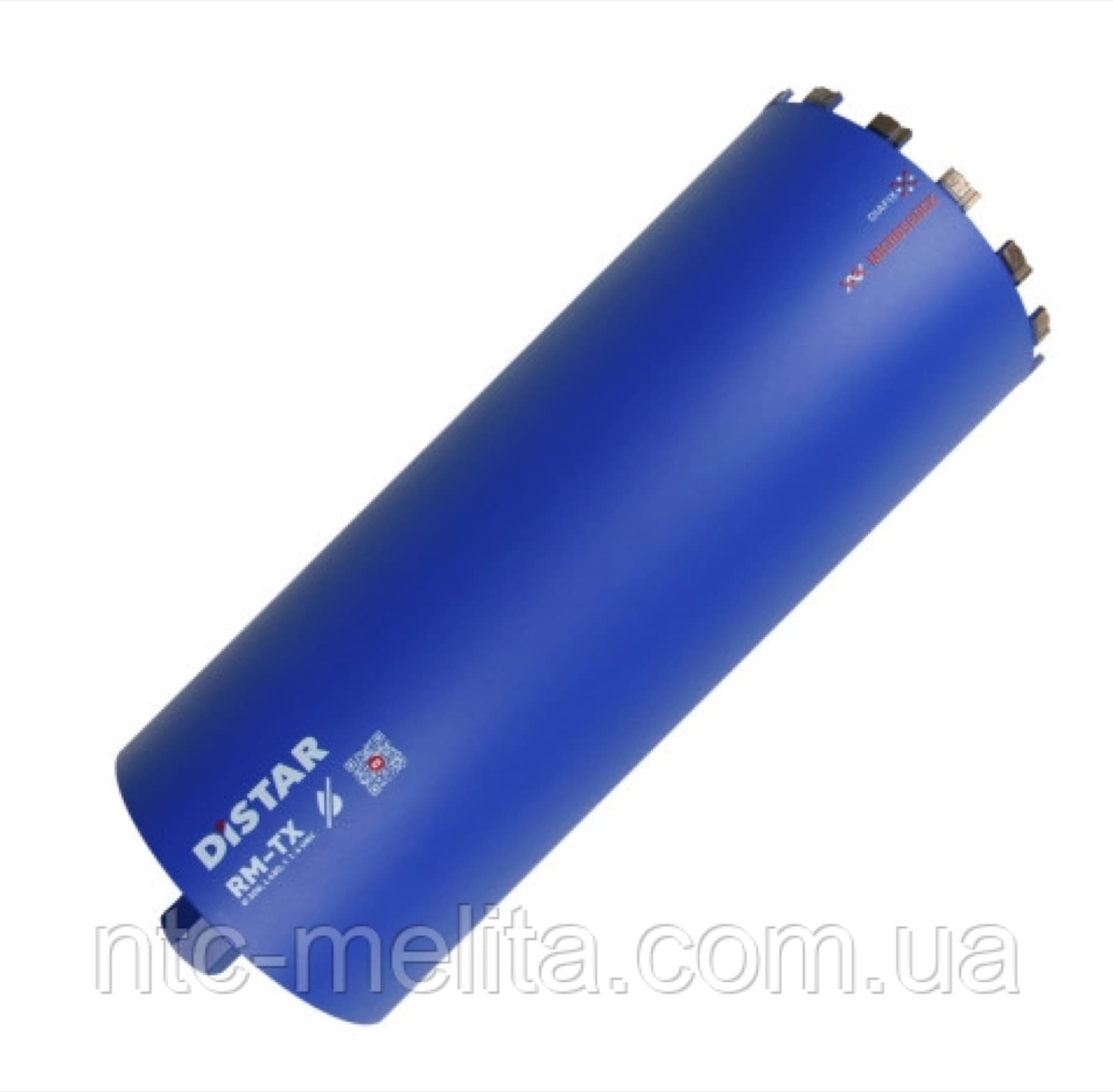
The 1 1/4 UNC thread is for diamond drilling rigs (drill motors on a stand). These core bits are long, 450 mm working length, and designed for reinforced concrete. For high-volume installation in cast-in-place concrete buildings, use a 72 mm or 82 mm 1 1/4 UNC core bit (about 4,150 and 4,650 UAH incl. VAT); for large boxes, 112 mm. They do not fit a rotary hammer.
How to drill for a flush box: step by step
The procedure is the same for a single socket and for a gang; only the marking differs.
- Check the wall with a detector for cables and pipes.
- Mark the hole centre and draw a horizontal line with a level. The socket height above the floor is set by the project, not by the core bit.
- Drill a pilot hole with a regular 6-8 mm drill bit to the depth of the core bit. The centring drill in the adapter follows it and keeps the core bit from wandering at the start.
- Start at low speed without impact, at a slight angle, until the bit bites along the full circle, then bring it square to the wall.
- Drill without heavy pressure. When drilling dry, pull the bit out every 10-15 seconds to cool it and clear the dust.
- At a depth of 50-55 mm remove the core bit and break out the core with a chisel or with the rotary hammer in chisel mode. Level the bottom.
- Cut the cable chase, wet the hole and set the box in gypsum mortar flush with the plane of the future plaster.
Socket gangs: 71 mm centre spacing
For two or more sockets in one frame, flush boxes are set side by side at 71 mm centre spacing - the common European pitch that multi-gang frames are designed for. They are drilled with the same 68 mm core bit: the holes overlap by a few millimetres and the boxes are joined with side locks.
Mark all centres at once on a level line with 71 mm pitch, and drill the pilot holes before you start with the core bit. Check the frame pitch on its packaging: some series differ.
All core bits for concrete, brick and reinforced concrete are in the diamond core drill bits section. If you need to cut a cable chase, you will need an angle grinder with a diamond disc for angle grinders.
Need a batch of core bits for a crew or a selection for a specific drilling rig? Send the diameters and shank type via the quote request form. MELITA issues a VAT invoice, delivers across Ukraine, or you can pick up for free in Dnipro.
FAQ
What core bit size do I need for an electrical box?
The standard is 68 mm for a box with an outer diameter of about 64-68 mm. 72-82 mm is used for boxes with a wider body or for setting in mortar with extra clearance.
How deep should I drill for a flush box?
5-10 mm deeper than the box. For a regular 40-45 mm box that is 50-55 mm, for a 60 mm deep box about 65-70 mm.
Can I use a diamond core bit with hammer action?
No. A diamond core bit is used only in rotation mode without impact, otherwise the diamond layer and segments chip off. Carbide core bits are the ones that work with impact.
What is the centre spacing for multi-gang boxes?
Usually 71 mm - multi-gang frames of most series are made for this pitch. Check the value on the frame packaging.
What should I use to drill socket holes in reinforced concrete?
A diamond core bit, preferably with water. For a large number of holes a diamond drilling rig with a 1 1/4 UNC core bit is faster.