
○ To orderЛОМО
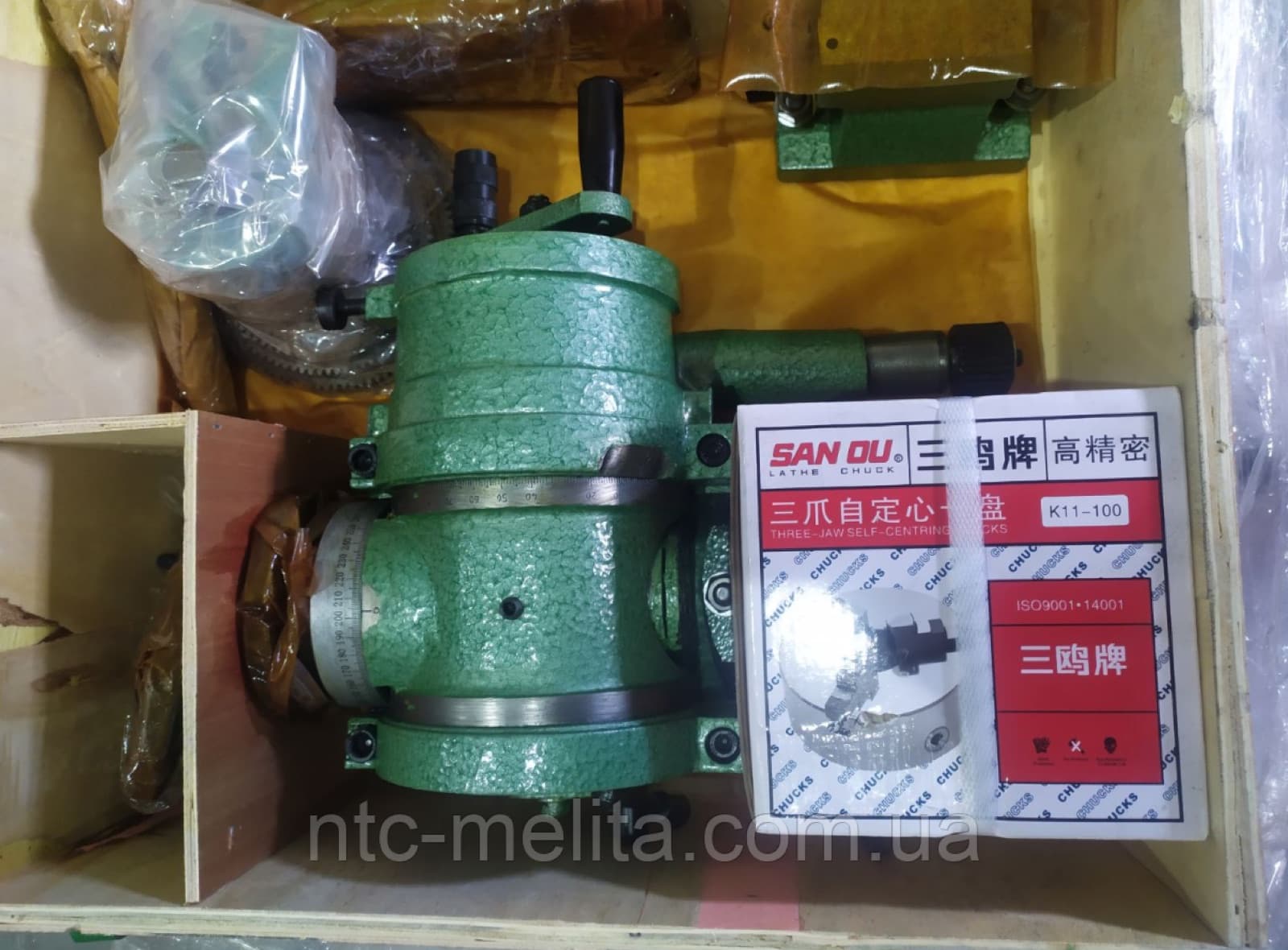
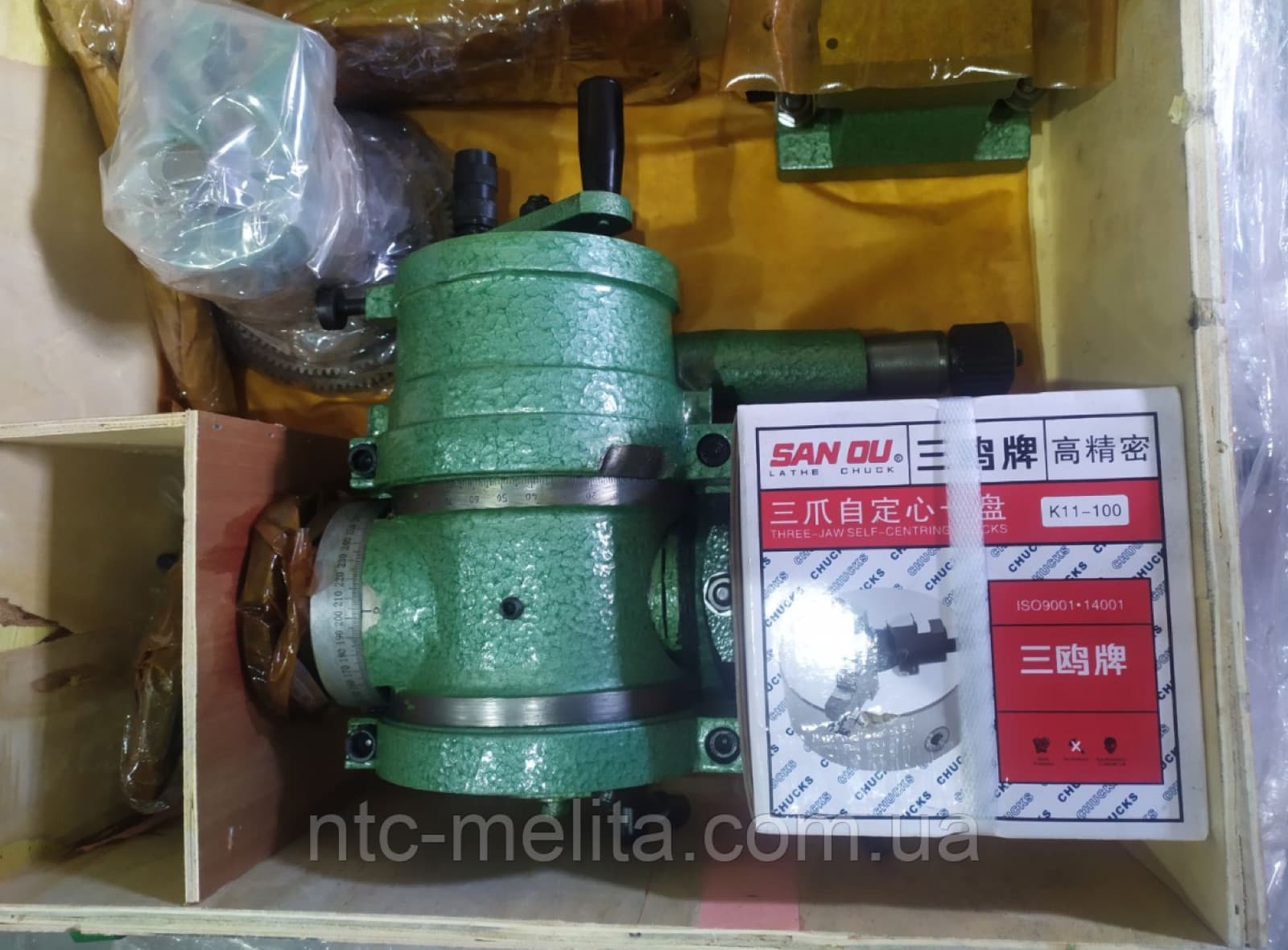
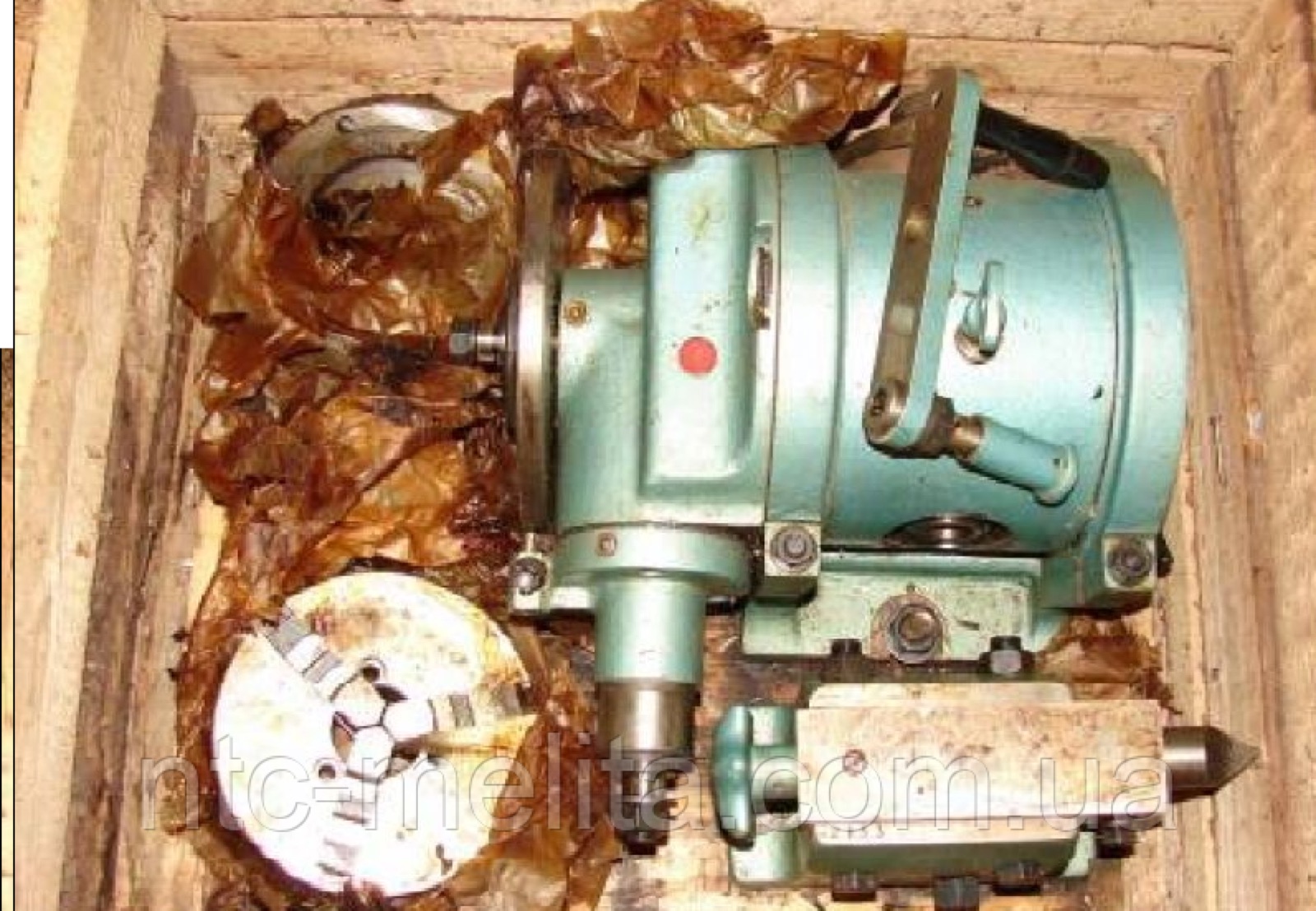
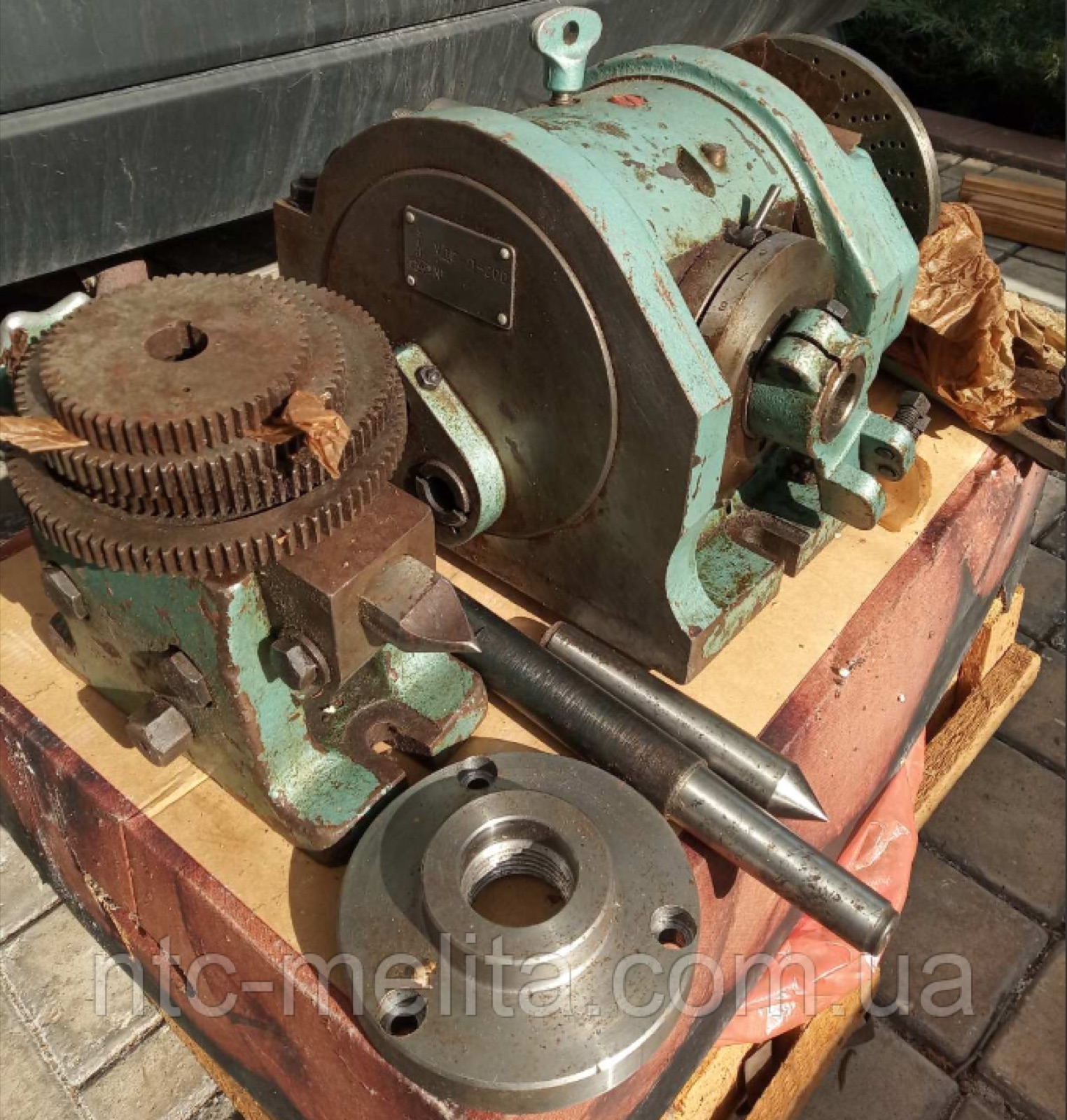
Universal dividing head UDG D-200
36 000 ₴incl. VAT
30 000 ₴ excl. VAT · invoice for companies and sole proprietorsGet an invoice or a quote
Nova Poshta, Meestat the carrier's rate
Freight carrierat the carrier's rate
Pickup, Dniprofree
Specifications
| Main | |
|---|---|
| Manufacturer | LOMO |
Description
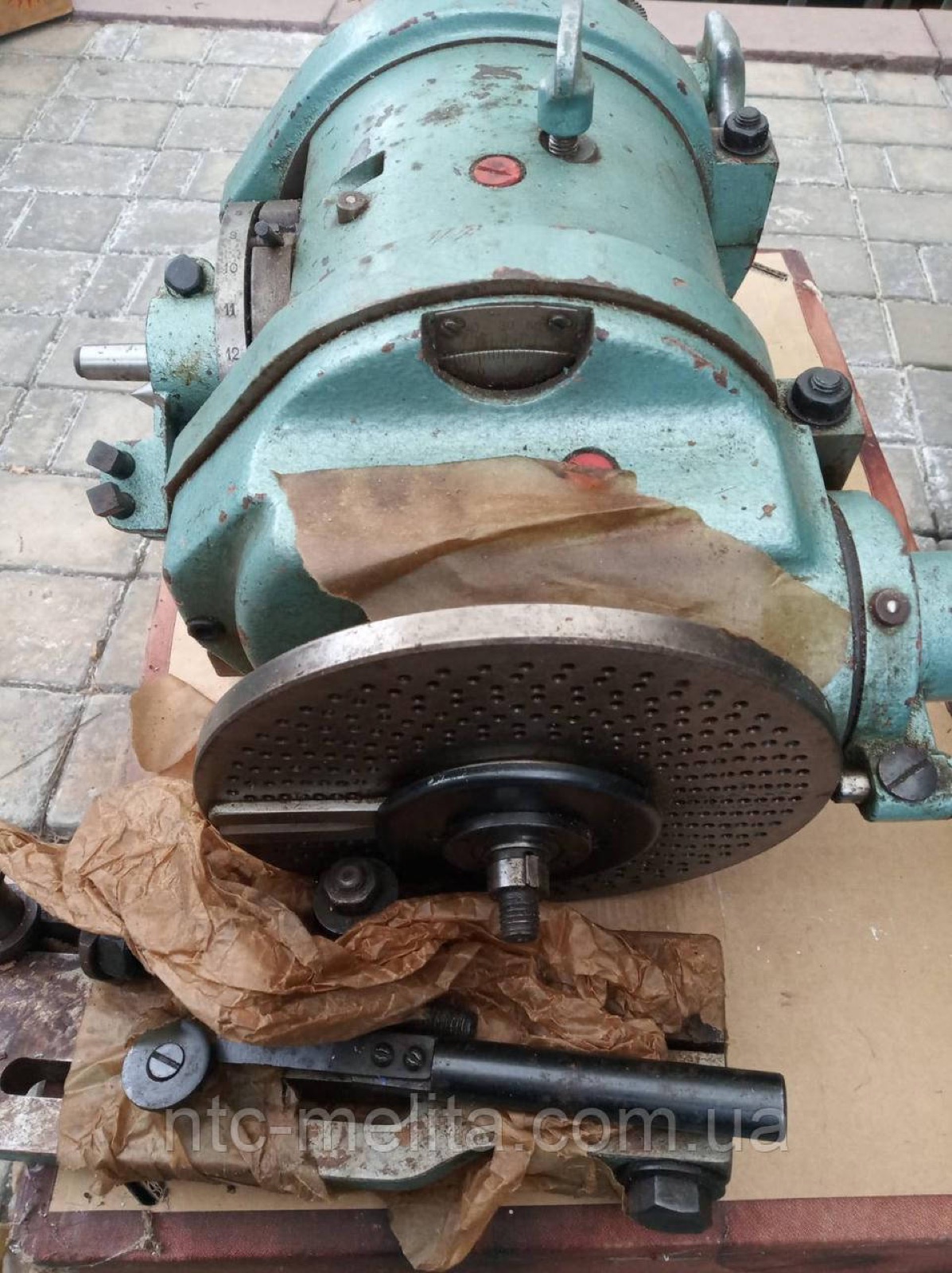
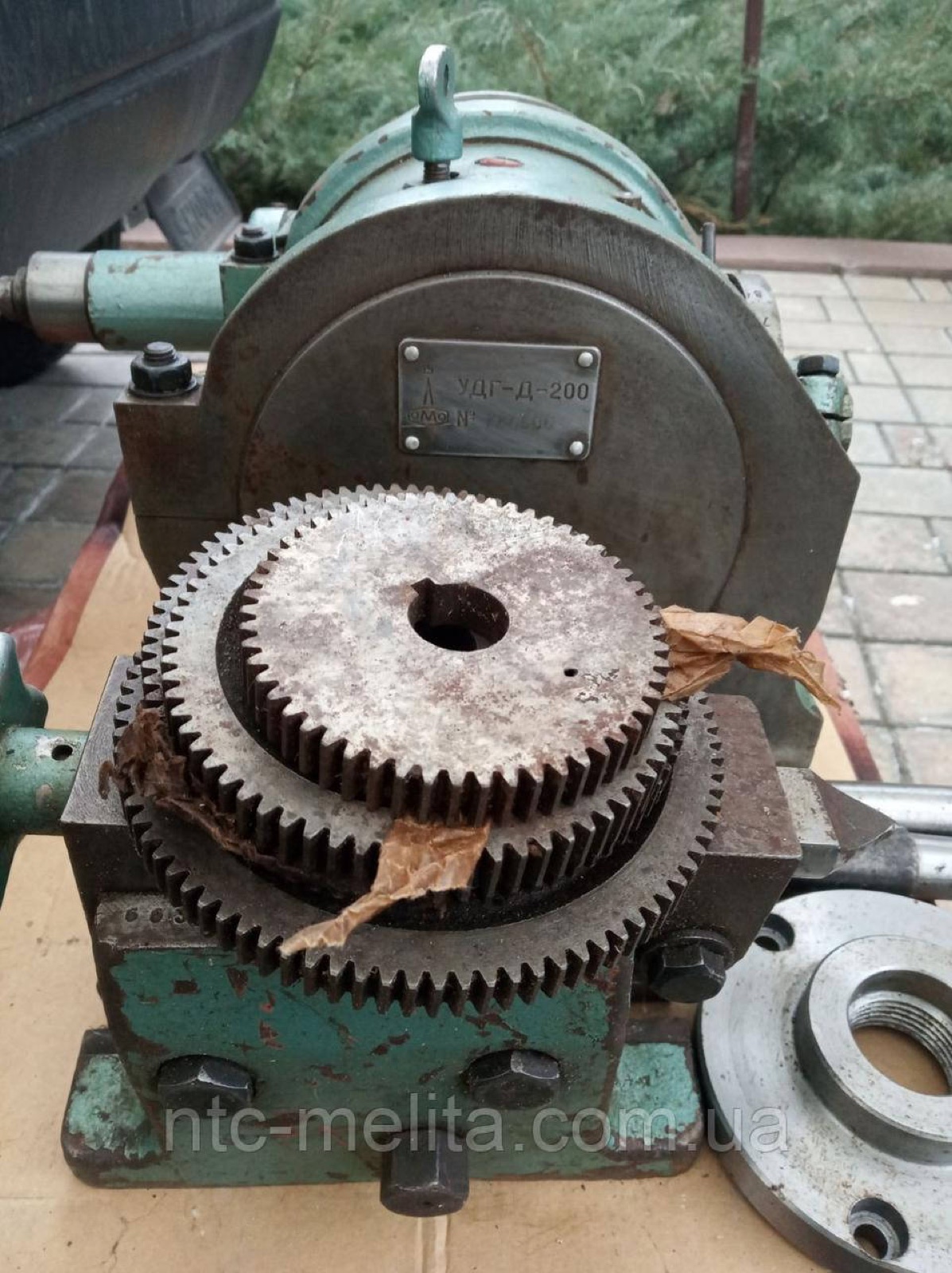
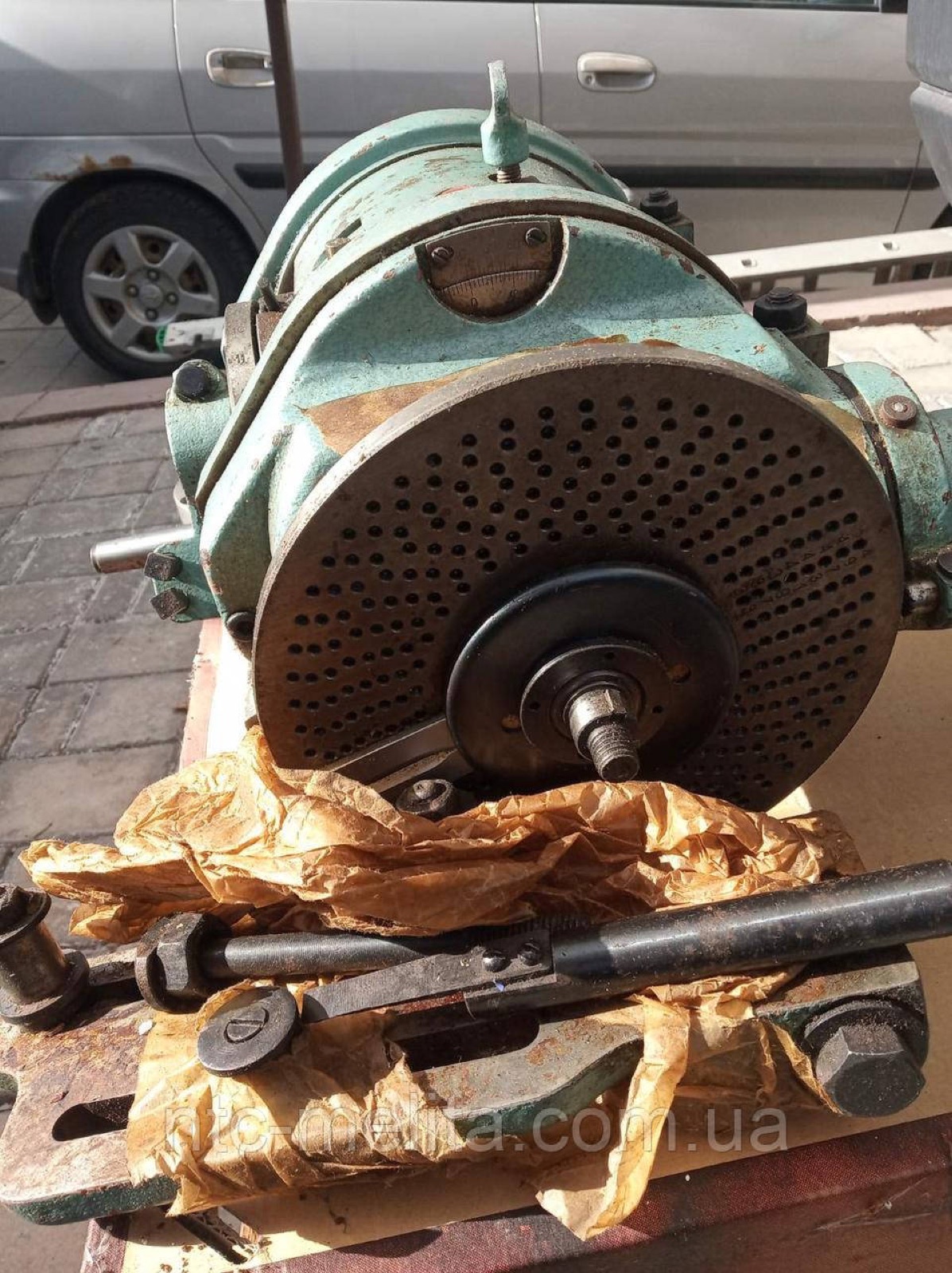
The LOMO UDG D-200 universal dividing head mounts on a milling machine and indexes the workpiece to a set angle. It is used to mill splines, gear teeth, flats and helical grooves with a lead from 25 to 3070 mm. The head supports direct, simple and differential indexing.
The worm gear ratio is 1:40, centre height 105 mm, spindle taper Morse 3, and it comes with a 125 mm three-jaw chuck. Direct indexing gives 2, 3, 4, 6, 8, 12 and 24 divisions, differential indexing 43 to 400. The number 200 is the largest workpiece diameter. It suits tool rooms and repair shops running knee-type milling machines.
Universal dividing heads UDG-D-200
Under GOST 8615-69, the main size of dividing heads is the largest machining diameter D. The standard provides a series of six head sizes D = 160; 200; 250; 320; 400 and 500 mm. Model names: UDG-D-160, DD-200, UDG-250, UDG-400, UDG-500.
The worm gear ratio of these heads is 1: 40 (N=40), i.e. the head spindle makes one full revolution for 40 turns of the crank.
Workpiece circle division range - up to 400 parts, including prime numbers.
Universal dividing heads allow indexing by three methods: direct, simple and differential, and are used to equip milling machines in one-off and small-batch production.
Each machine size (by table width) should be matched with a specific dividing head size. For example, for No 2 knee-type milling machines (table width 320 mm) a dividing head with a maximum workpiece diameter of D = 250 mm is recommended, and for No 3 milling machines (table width 400 mm) - the UDG-D-320 dividing head, etc.
Dividing head UDG 200
The UDG 200 universal dividing head is used on metalworking machines (mainly milling machines) for direct, simple and differential indexing. The UDG 200 provides periodic rotation of parts. The number 200 in the designation is the largest workpiece diameter. The head model should match the machine table width. For example, the UDG 200 head suits a knee-type milling machine with a 250 mm table.
Operations performed with UDG heads
- direct indexing into 2, 3, 4, 6, 8, 12 and 24 parts;
- simple indexing into 2 to 2160 parts with gaps;
- differential indexing of a circle into 43 to 400 parts without gaps.
- milling of helical grooves with a lead of 25 to 3070 mm;
- various milling operations involving dividing a circle into unequal parts (in degrees).
- In addition, the heads are used for other work involving dividing a circle into parts and for various layout work.
UDG 200 specifications
| Parameter | 7036-0052 |
| Distance from base to spindle face H, mm | 235 |
| Center height h, mm | 105 |
| Morse taper | 3 |
| Threaded spindle nose per GOST 9150 d0 8g | M39x3 |
| Spindle swivel angle in the vertical plane: | |
| down from the center line (a) | 5 |
| up from the center line (p) | 95 |
| d1 h5 | 40 |
| Spindle bore diameter d2, mm | 20,2 |
| l | 25 |
| Worm gear ratio | 1:40 |
| Number of holes in the index plate: | |
| on one side | 16, 17, 19, 21, 23, 29, 30, 31 |
| on the other side | 33, 37, 39, 41, 43, 47, 49, 54 |
| Self-centering chuck diameter, mm | 125 |
| Direct indexing dial graduation | 15 |
| Guide key width, mm | 14 |
| Change gear bore diameter d3 f9 | 20f9 |
| Change gear module | 1,5 |
| Number of gears | 25, 30, 35, 40, 50, 55, 60, 70, 80, 90, 100 |
| Dividing head base dimensions LxB, mm | 260x180 |
UDG scope of delivery
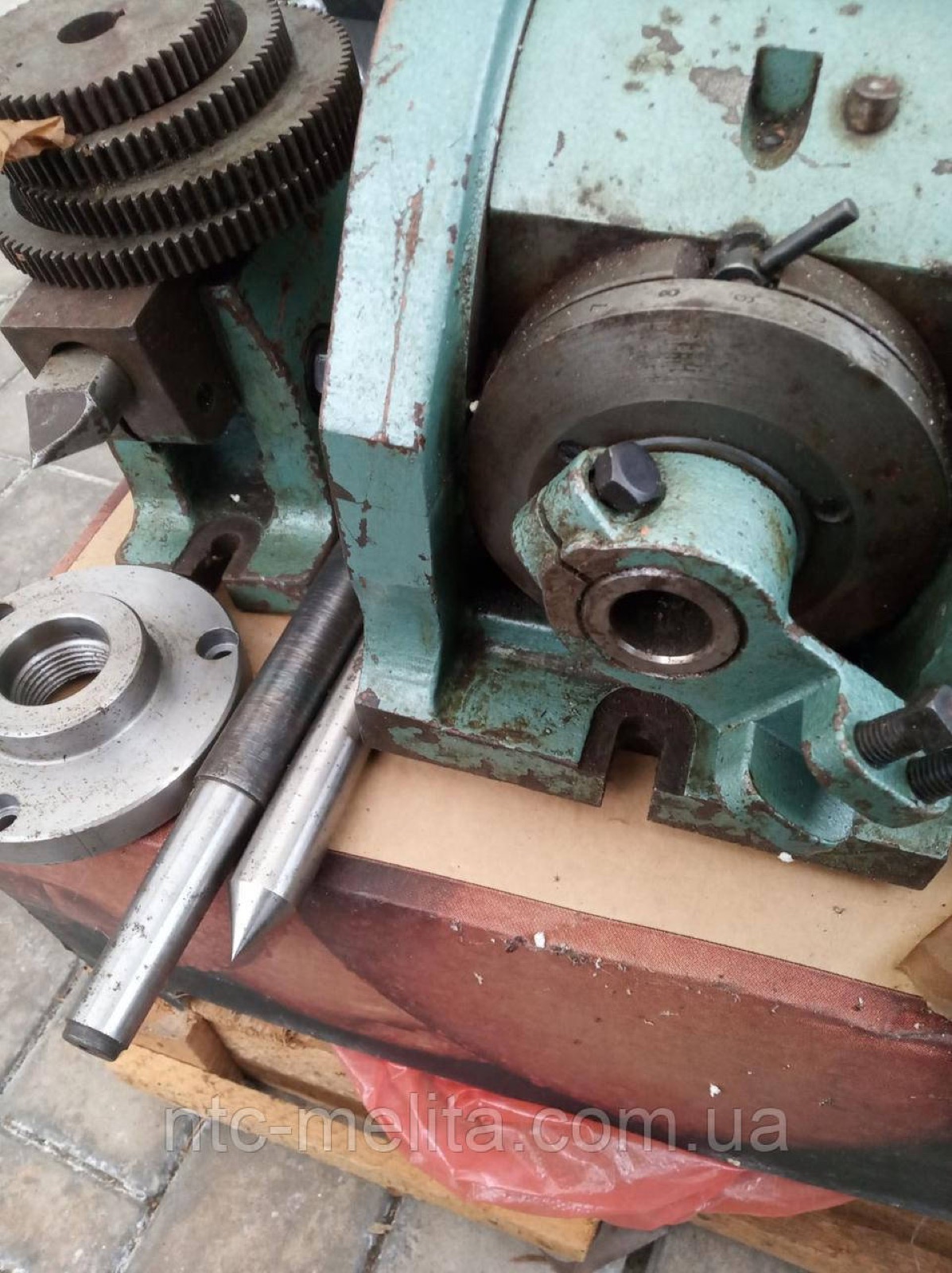
- Universal dividing head;
- Flange;
- 3-jaw chuck;
- Tailstock;
- Dead center
At the customer's request, the head can be supplemented with the following items:
- Steady rest;
- Change gear train for differential indexing;
- Change gear train for helical milling;
- Change gears;
- Driver dog.
Other UDG 200 specifications
| Center height | 105 mm |
| Maximum workpiece diameter | 200 mm |
| GOST designation | 7036-0051 |
| Weight | 50 kg |
| Version | With threaded spindle nose |
| Standard | GOST 8615-89 |
| Lathe chuck diameter | 125 mm |
Product reviews
All MELITA reviews →No reviews of this product yet. Bought it from us? Tell others how it works.
Similar items: UDG dividing heads
Entire category →